2025
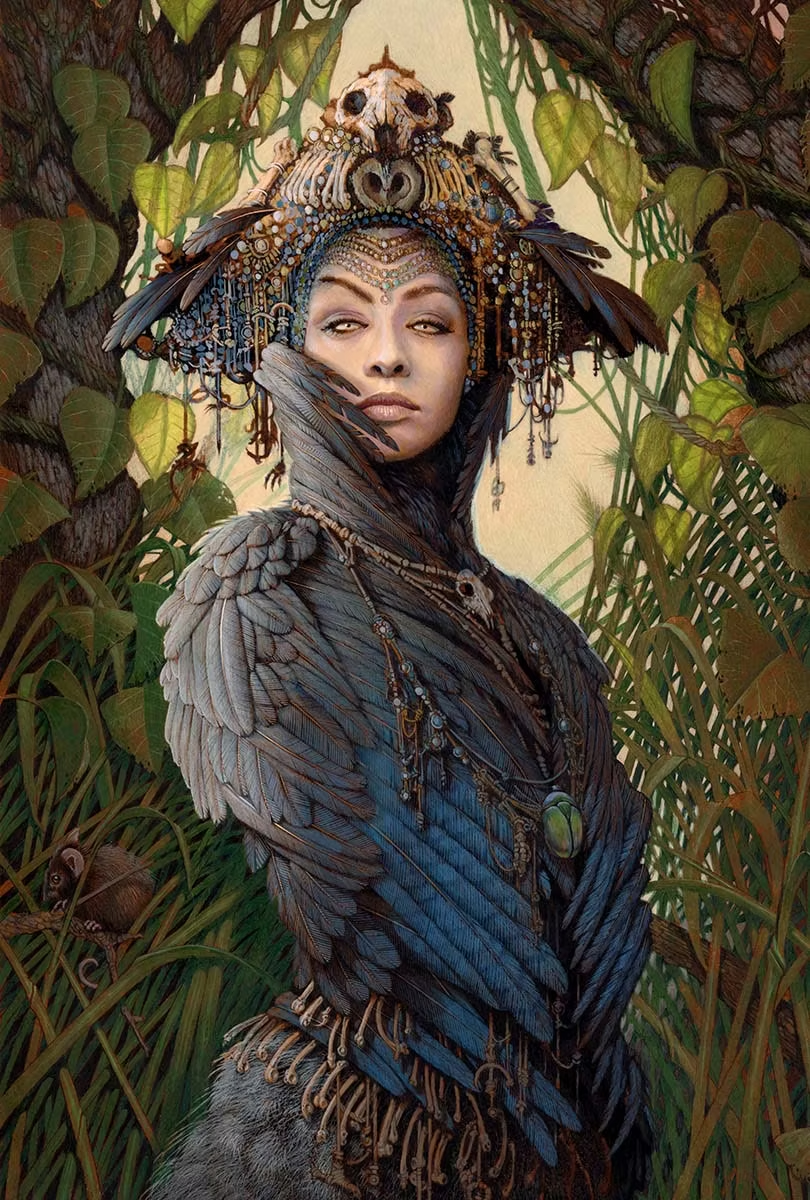
Have you ever had that feeling that someone is watching you from just beyond the tree line? That prickling sensation on the back of your neck while wandering a misty forest path? Perhaps it was Ed Binkley, sketchbook in hand, documenting your encounter with his meticulously detailed woodland denizens before you even realized they were there.
Binkley’s art feels less created and more… discovered, as if he’s somehow gained access to a hidden archive of supernatural field notes. His faeries, shamans, and assorted cryptid curiosities peer from the pages with such specificity that one suspects he must keep have recruited them as sources and informants, feeding him scraps of imagination and starlight so that he may best capture their likenesses in exquisite detail. There’s a sense of authenticity to these beings—they seem to exist with complete lives beyond the boundaries of the page, carrying personalities, histories, and perhaps even opinions about which mushrooms make the best rooftops.
“Corvid Priestess” peers from the pages of my book, The Art of Fantasy: A Visual Sourcebook Of All That Is Unreal with a gaze that suggests ancient knowledge and ritual importance. Her avian elements aren’t fancy accessories selected on a whim—they’re integral to her identity as a being who bridges worlds. The remarkable fusion of human and bird creates something wholly original, a priestess whose connection to corvid energy manifests through both spirit and form. One imagines her presiding over moonlit ceremonies, communicating in languages both human and avian, serving as translator between realms.

Binkley’s worlds exist next door to our own, like that neighbor’s house you’re pretty sure hosts something freaky every full moon but can never quite catch in the act. In “Soul Whisperer,” a veiled figure guides spirits to their next existence with all the calm efficiency of a supernatural TSA agent. Their veil—adorned with beads and tiny bones—makes music “like tiny wind chimes, inaudible to the rest of us,” which is just as well because the last thing you want when crossing to the afterlife is a jangly soundtrack announcing your arrival.
The textures in Binkley’s work invite closer inspection and are so tactile you’ll find yourself absently trying to pet your computer screen. Every feather, strand of moss-like beard, and antler-etched rune is rendered with precision that transforms flat images into seemingly tangible beings. His technique marries digital sketching with traditional colored pencil in a harmonious artistic union that preserves the warmth of handcrafted art while embracing technological possibilities. The result feels both ancient and immediate—beings documented in their natural habitat rather than merely imagined.

“Scout” embodies youthful vigilance and has all the hallmarks of that kid in the neighborhood who somehow always knows everybody’s business before they do. This watchful entity seems caught mid-reconnaissance, probably reporting back to some elder woodland power about the shitty humans who keep leaving energy bar wrappers in the sacred grove. The slight head tilt practically broadcasts, “I saw what you did last summer solstice.”
Binkley’s figures inhabit a rich tapestry of folklore and fantasy literature, from high-fantasy to horror to dreamscapes. These beings explore varied emotional territories while maintaining the distinctive thread that connects all his creations—a sense that these beings belong to coherent, complex societies with their own rules, rituals, and relationships.

In “Mantis,” we meet another hybrid being, one who has embraced the full mantis lifestyle. Its elongated limbs and complex garments suggest a society with fashion magazines, designer labels, and possibly a “What Not to Wear (When Decapitating And Eating Your Mate”) reality show. The figure has perfected that quintessential mantis vibe, that stillness unique to mantids—an unnerving quality of absolute presence that makes you wonder if you’re being sized up as prey or simply observed with alien curiosity.

“Chrysalis” showcases our fascination with transformation, and who among us hasn’t experienced an awkward transitional phase where we’re neither fully one thing nor another? (Minus the literal exoskeleton and carapace detritus, presumably.)
The figure exists in that universal state of becoming that feels simultaneously exciting and mortifying, the human equivalent of butterfly soup, that vulnerable yet wildly potential state where you’ve committed to shedding your old self but haven’t quite figured out what your wings look like. Like three chapters into writing a book with no clear ending in sight, and you haven’t fully worked out exactly what it is you’re writing about yet or how any of it relates to anything else at all, and actually, I don’t even know if that example relates to this artwork in the slightest, but that’s where I am at mentally right now!
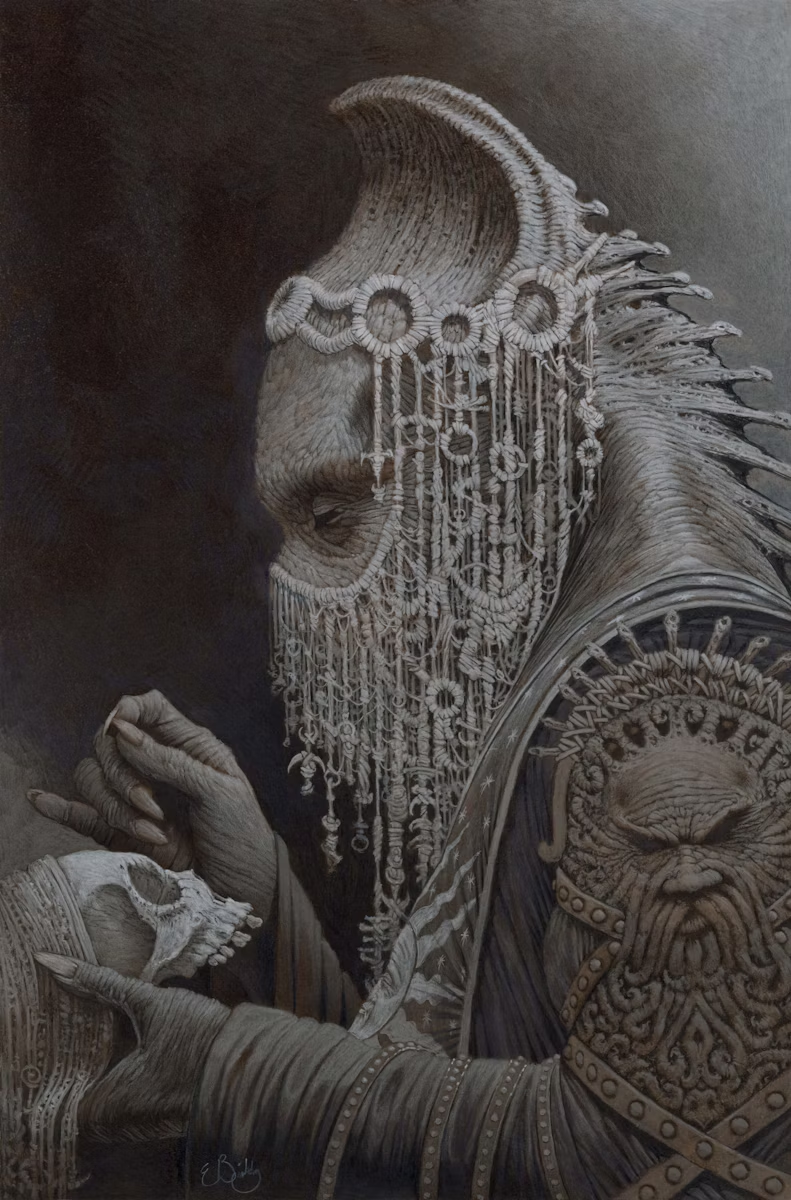
“Listener” depicts a being tuned to incomprehensible eldritch frequencies. The meditative pose suggests active reception of cosmic broadcasts—picking up everything from tree gossip to star conversations to the subtextual grumblings of tectonic plates. Would such sensitivity be a gift or a curse? Would the constant chatter of atoms and echoes of ancient sounds drive one to madness? Or would it connect one to the universe in deliriously strange and wonderful ways?

I’ve developed a particular affection for Binkley’s goblins—those delightful domestic prankers who, I’m convinced, live in my own home. What else explains the earring that vanished from my bathroom counter, only to materialize six months later inside the House of Psychotic Women tote bag I hadn’t used since last winter? Or the specific creak my hallway floorboard makes at 3:17 AM with metronomic consistency?
Just last week, I set my coffee mug down while checking email, only to find it had migrated to the top of my bookshelf when I turned back around. The mug, notably, had a Terry Pratchett quote about magic on it—clearly my resident goblin has a flair for the ironic. Binkley’s illustrations give these mischief-makers faces and forms, validating my suspicions that I share my living space with creatures whose entertainment comes at the expense of my sanity and organizational systems.
That’s okay, goblins; I love your crazy ways!

In our world of increasingly mass-produced, algorithm-approved visual pablum, Ed Binkley’s intricately artful fantasies feel like stumbling upon a secret garden where the plants talk back and have opinions, the bugs have human faces and agendas, and there are secret societies teeming beneath your feet, just below the range of hearing, and beyond the range of sight… but surrounding us constantly.
His creatures and beings communicate the stance of those who have traveled far, possibly through dangerous terrain, to seek admission to mysteries beyond our perception. The gravitas in their bearing suggests responsibilities beyond mortal comprehension—perhaps they maintain boundaries between dimensions or ensure that certain ancient entities remain slumbering. And yet their fusion of hybrid features with expressive humanity suggests perceptions which, though must differ wildly from our own, lurks a consciousness with recognizable emotions and thoughts that experience the universal mixture of awe and terror, hope and uncertainty, the willingness to be transformed by what comes next, that comes from merely being alive, from existing.
Each Binkley piece carries that uncanny feeling of recognition – not because you’ve met these specific beings before but because some ancient part of your brain has always known they’re out there, watching, waiting, and occasionally borrowing your good stork-handled stitch-snipping scissors without asking. His art whispers: the world is weirder, wilder, and more wonderful than they (you know, THEY) would ever have you believe.
Who are you going to believe? Them? Or Ed Binkley? I believe you, Ed.


If you enjoy posts like these or if you have ever enjoyed or been inspired by something I have written, and you would like to support this blog, consider buying the author a coffee?
