2025

The Vourdalak felt like stumbling across some hazy, grain-heavy Eastern European horror film from the 70s, perhaps like something in the vein of Valerie and Her Week of Wonders, where the atmosphere matters more than narrative clarity and everything has this dreamy, unsettling quality. Except this one seems to have more of a linear story than those films I’m thinking of, so I guess it’s not quite the same thing at all…?
A French nobleman, Marquis d’Urfé, gets stranded in the wilderness and seeks refuge with a family living in an isolated manor. Their patriarch Gorcha has gone off to hunt Turkish bandits, and there’s a warning: if he doesn’t return within six days, don’t let him in. If he does return after that, he’ll be a vourdalak—a vampire creature that feeds on its own family.

Of course, Gorcha returns. And Gorcha is played by a puppet. Not CGI, not heavy prosthetics on an actor, but an actual marionette, skeletal and cadaverous, voiced by the director. I read that some viewers hated this choice and found it broke their immersion entirely. I thought it made the film. The jerky, not-quite-right movement, the way the family has to interact with this thing that clearly isn’t their father anymore, but they’re all pretending (or desperately wanting to believe) that it is. Creepy and campy at the same time, which describes the whole film pretty well.

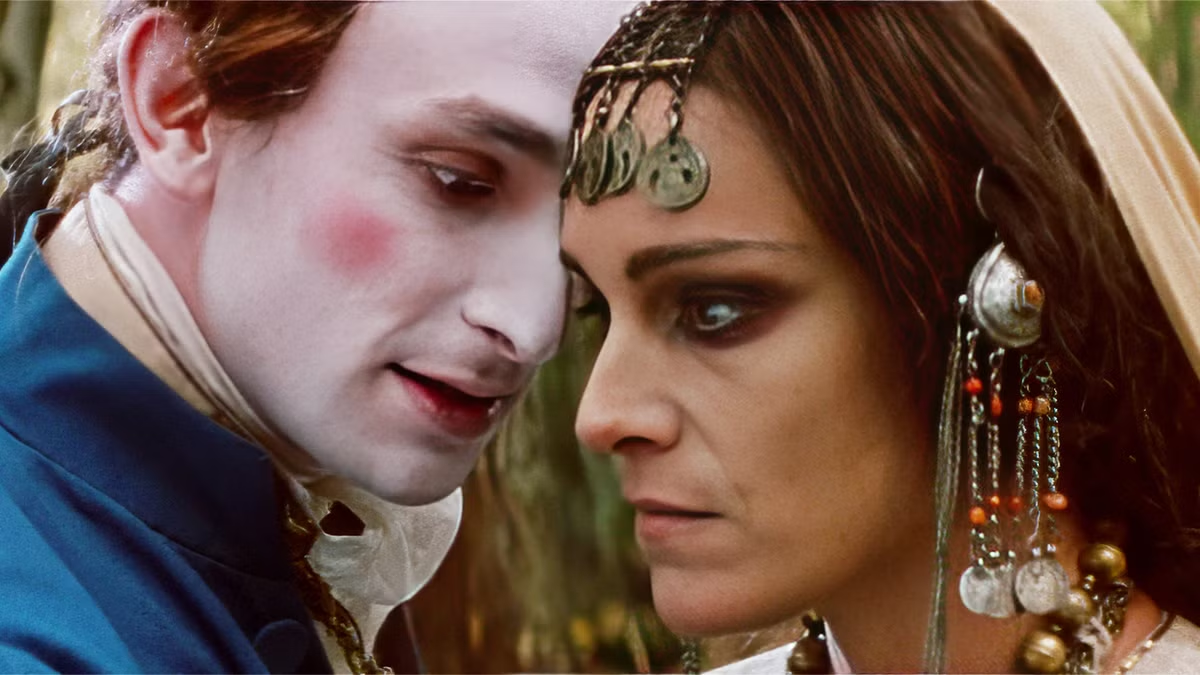
The Marquis is a bit of a slimy horndog, immediately fixating on Gorcha’s daughter Sdenka and making unwanted advances. She rejects him repeatedly (she’s mourning a lost love and bitter about her circumstances), but he keeps pushing. It’s gross, though I could see how a genuine friendship might have developed between them if he’d been less of a creep.
What I loved were Gorcha’s younger children, Piotr and Sdenka. The Marquis follows them into the woods one day as they’re gathering supplies, garlic flowers, wood for stakes, all the vampire-hunting essentials, and the way they talk about it reminded me so much of the Frog Brothers in The Lost Boys. That matter-of-fact, practical approach to dealing with the undead. “Here’s what we need to kill a vampire, let’s get to work.” No dramatics, just siblings who understand what’s happening and what needs to be done, even if the rest of the family is in denial.
Piotr is also navigating gender identity in this oppressive household, dressing in ways that anger his older brother Jegor but that Sdenka accepts without question. It’s a small detail in the story, but it adds depth to these characters beyond just “vampire victims.”


The film is creepy in an old-school European folk horror way, all the misty woods, candlelit interiors, everyone in period costume behaving strangely. A grainy, textured look that feels genuinely vintage, with pacing is slow, deliberate, atmospheric.
There’s a scene involving the Marquis and Gorcha that’s both gross and darkly funny…I won’t spoil it, but it’s the kind of moment that makes you go “oh god” while also appreciating the audacity. And then the actual final moments are fairly devastating. The Marquis does something selfless for maybe the first time in the film, and the last shot is perfectly ambiguous about whether anyone actually escapes this curse.
Looking for more 31 Days of Horror? Day Sixteen 2024 | Day Sixteen 2023 | Day Sixteen 2022 | Or check my 31 Days of Horror category for more!
If you enjoy posts like these or if you have ever enjoyed or been inspired by something I have written, and you would like to support this blog, consider buying the author a coffee?

Anna says
I'd seen this pop up in Kanopy, but this really sold me on giving it a go! It sounds so atmospheric.
Anton says
I saw this in the theater a couple months ago and was astounded. (I also thought of *Valerie*!) What a deeply strange film. The marionette choice was really so wild, so utterly out there and yet... After those jarring first few minutes my brain just went "okay."