A Walk With the Beast and Dark Interval from my personal collection.
I first officially learned of Argentinian artist Hector Garrido when attempting to figure out the artist of the livid, crimson-shrouded book cover with an aggressive succubus hollering at a raven under a bright, glowing full moon. “Hey, bird! Fuck you, bird!” is what I imagine that she’s shouting for reasons of her own, none of my business, probably.
I had originally seen it posted on someone’s Instagram, and those images are more annoying to grab for reverse image search purposes, but not impossible, so I found it (on Will Erickson’s blog, of course!) and here we are–it’s Hector Garrido!
…and it turns out that I have been enjoying Garrido’s art for YEARS without realizing it.
Hector Garrido cover art for Nancy Drew Enemy MatchHector Garrido cover art for The Ghost Belonged to Me
Of course, the Nancy Drew mystery books that I read when I was much younger were the hardback editions with a more dated look from an earlier era and a different artist, but a few years later, when I was 9 or 10 or so, I definitely recall finding the newer paperbacks in the library and being gobsmacked that you were allowed to update and change the way the characters in these books looked! But a pretty, intrepid young detective creeping up a cobwebby dark staircase is dreamy to my eye rendered by any artist’s hand, and I got used to the changes and even found myself getting excited to see various artistic interpretations of the stories and series that I love–and I remain thrilled to this day.
Another book I was surprised to see displaying the work of Hector Garrido was The Ghost Belonged to Me, by Richard Peck, one of the eerie Blossom Culp stories I loved as a child. I’ve written before of another one in this series, Ghosts I Have Been with cover art by Rowena Morrill, and I’m always so tickled when my search for a cover artist inevitably leads me back to these beloved tales and characters.
Garrido also did a lot of G.I. Joe art, but eh. Not interested in that. I know, I know, iconic formative stuff for lots of folks! Just not my bag. However, he also did covers for several of the Avon Satanic Gothic titles in the 70s and that most definitely would have been my little ten-year-old jam!
Hector Garrido art for A Walk With The Beast
Hector Garrido art for Dark Interval
Sadly, while looking into his life and work, I only learned today that Hector Garrido passed away in 2020. In his own words, here’s a bio on this prolific artist of the lurid and lovely, baleful and beautiful.
“As a young artist I immigrated to the United States. I was professionally active here beginning in the 1950s. Beginning around 2000, I went into semi-retirement, painting devotional subjects. I am now retired.
I am best known to fans of GI Joe and for such book series such as The Three Investigators (I painted all the Crimebusters covers), Danny Dunn, the Hardy Boys, Nancy Drew, The Destroyer (Remo Williams), and the Baroness.
My original artwork for GI Joe was featured on the 1980s-era merchandise packaging. For book publishers, I painted the covers of numerous sci-fi, (gothic) romance, and thriller/horror books. Perhaps most notably in the horror genre, I painted the iconic covers for TM Wright’s “Strange Seed”/”Children” series. I was also a Time Magazine cover artist, and my 1969 cover, “Astronauts” is in the permanent collection of the Smithsonian National Portrait Gallery.”
You’ll find several albums of original paintings in Garrido’s flickr account, and here is a list at ISFDB of much, much more cover art that he was responsible for– though I don’t believe it to be at all comprehensive.
Below I’ve shared some of my favorites among the gothic romance covers he did, brimming with ghostly damsels and their requisite candelabras, haunted castles looming and leering, and ridiculously sumptuous with atmosphere and tension.
Hector Garrido cover art for The Devil’s Dance
Hector Garrido cover art for The Dark Gondola
Hector Garrido cover art for The Girl from Yesterday
Hector Garrido cover art for Storm House
Hector Garrido cover art for The Medea Legend
Hector Garrido cover art for Beast in View
Hector Garrido cover art for Pray for a Brave Heart
Edouard John Mentha, Lesendes Dienstmädchen in einer Bibliothek
If you read a book and write a review for it and share that review on the internet, but then those websites with your reviews close down or rebrand, and your work disappears… did it even happen?
This is something I’ve been struggling with for a while, and being a stubborn so-n-so, I have tediously scraped archive.org for my past work and have managed to compile over 100 book reviews – almost 25K worth of writing! See below for an absolutely massive collection of book reviews, originally posted between 2016-2020. They’re all out of order, chronologically, and I wouldn’t suggest you read this straight through, anyway. It’s a lot. There’s not a human person on Earth with that kind of attention span! Maybe just bookmark it to peruse at your leisure when you need a random recommendation. Maybe skim through and pick out a few things for your Goodreads list. Maybe you find a review that you vehemently disagree with and leave me a comment telling me so!
Do with this as you will!
Darkly: Blackness and America’s Gothic Soul by Leila Taylor Darkly was an illuminating, insightful read that gave me pause with every sentence. Part personal memoir, part cultural critique, part valuable history lesson, Taylor meditates on the Black experience and gothic culture through a collection of observations on music, film, art, philosophy, architecture, decay, and violence– and through these observations invites us to more closely analyze and question the aesthetics of those dark things we hold dear.
Something that struck me, in particular, is where Taylor asserts that: “goth is above all privileging the imagination over reason, choosing the fanciful over the pragmatic, forgoing restraint for excess,” and she further comments on the privilege of this frivolity and how this ostentatiousness is typically seen as a sentiment only for white people. That Blacks must be ever vigilant (due to the very justified paranoia that they can’t afford distraction) and therefore there’s this sense of gravitas or this sense of pride that they’re supposed to keep up and aren’t allowed strangeness or bizarreness. In this interview she brings up the phrase that gets tossed around, “What kind of White nonsense is that?” and further posits the often unasked question, that ”how is it that white people are allowed nonsense, but somehow Black people are not?”
The Woman In Cabin 10 by Ruth Ware. Eh. It’s a mystery-thriller from Ruth Ware. A journalist goes on a bespoke, luxury cruise, thinks she hears someone being thrown overboard in the next cabin and investigates the incident after being told there was no one actually staying in that cabin. You either like this sort of thing, or you don’t. I don’t think Ware’s efforts are necessary staples of the genre, but they are pretty fun whodunits, why-dunits, and maybe-even-youdunits. Like…I’d pay full price for them at an airport bookshop, but I’d leave it on my seat for the next passenger because I don’t see the need to make it a permanent addition to my bookshelf.
I think what I exceptionally don’t love are her characters, which typically seem to be people with messy lives that are in some fashion or another, either slowly or spectacularly, going to shit. Which hey, that could be any of us. I can’t be too judgy, I guess. But these individuals are annoyingly reckless and irresponsible (or at least they seem so to me, but I can be a little stodgy sometimes, and also maybe I see something in them that makes me feel very uncomfortable about how carelessly I behaved in my twenties) and there’s something …disagreeable about them that makes me not very sympathetic to whatever corpse-ridden mess they find themselves in. However. I’m on my library’s waitlist for the new title from this author so what do I know, anyway?
The Witch Elm by Tana FrenchIf Ruth Ware is the “eh it’s ok” of the psychological crime thriller authors, then I would venture to say that Tana French is one of the luminaries of the genre. What I enjoy most, I think, about French’s stories, is that neither the plots nor the perspectives/point of view take a predictable course, the characters don’t know each other or themselves very well, and even the detectives can’t necessarily be trusted. In The Witch Elm, Toby is a carefree, #blessed sort who doesn’t have to try very hard at anything and things just generally turn out okay for him with no effort on his part. Until…they don’t turn out very okay at all, after a home break-in, during which he is beaten to within an inch of his life. Struggling to recover from his injuries with the realization that he might never be quite the same again, he and his inexplicably rock-solid girlfriend move into his family’s ancestral home to care for his dying uncle Hugo. During an extended-family visit, a skull is discovered in the trunk of an elm tree in the garden and as the mystery deepens over the course of the investigation, Toby begins to consider the possibility that his past may not be exactly the way he remembers it.
The girlfriend was so weirdly loyal that I was halfway expecting/hoping for her to have somehow orchestrated the whole home invasion incident AND have been responsible for the decades-old murder, but that’s just my imagination running away with me, and I guess thank goodness no one is counting on me to solve any crime. I enjoyed the heck out of this story, and it’s interesting to note that the plot is inspired by a real-life tragic and grisly unsolved crime.
Mexican Gothic by Silvia Moreno-Garcia I am not sure what I can say about this highly-acclaimed book that hasn’t been said. I mean it’s on everyone’s “best of 2020” lists for a very good reason. In 1950’s Mexico, a well-to-do young woman travels to an isolated estate to investigate her cousin’s frantic claims that her new husband is trying to kill her. A glamorous heroine who is tough, smart, and funny; the creeping decay and dread of an ancestral home in which resides some truly detestable and disgusting characters, disturbing dreams, ghosts that walk through walls, and a wonderfully interesting and super gross twist on the mechanics of the familiar haunted house trope. What’s not to like?
Ghost Summer by Tananarive Due In a similar “most likely to have all the things I like” vein, these engaging short stories by Tananarive Due tick every box for what I want in a summer read. (I think I read this in September, so that still counts, as far as I am concerned!) A vast spectrum of supernatural business, characters that I care about, masterful writing that is emotive and nuanced but not super dense or difficult. It’s got everything!
Dark Archives by Megan Rosenbloom Medical historian and biblio-adventurer Megan Rosenbloom’s investigation of books bound in human skin doesn’t just reveal details about the anthropodermic books, or the collectors who greedily hoarded them, or the craftspeople who created them; she passionately and humanely explores the people these books used to be. Along the way we learn of gentleman doctors in their mahogany-shelved libraries, flaunting strange collections; the gruesome and clandestine theatrics of midnight corpse-thieving grave robbers, midwives to royalty, 19th-century highwaymen in their final hours, poets and paupers, murderers and scientists–but as full as this book is of characters, Dark Archives provides an emotional examination that renders these pages, and I am quoting from The LA Times here, “…surprisingly intersectional, touching on gender, race, socioeconomics, and the Western medical establishment’s colonialist mindset.”
Come for the weird books facts, stay for the unexpected and powerful human questions. Additional questions, I might add, you can find answers for in our recent interview with the author!
Malorie by Josh Malerman. A Bird Box sequel exists. I read it. It was fine. Fast-paced, intense. It felt like it was missing something that I couldn’t quite put my finger on (maybe an extra 50 pages?) Maybe a bit rushed, sort a “direct to video” vibe. Also, like it was literally written for the screen. I finished it in the span of an afternoon, so I can’t say it didn’t keep my interest, but there are probably more interesting entries on this list. See directly below.
Bunny by Bunny Awad The less I say about this one, the better. It’s wild. One of the most imaginative things I have ever read. Dark and funny and wicked and perfect, and the setting is one with which I’ve developed a fair bit of a fixation. I have a peculiar fondness for characters deeply involved in high-level educational pursuits, especially in niche or obscure areas of study. I think it’s because I lived at home and worked crazy-stupid hours at a fast food restaurant while I attended community college classes–most of which I only showed up for half of the time because I have immense anxiety when it comes to classroom settings.
My failure to properly fulfill what I guess has been beaten into my brain as a sort of “All-American scholastic obligation” has led to a deep sense of shame about my lack of credentials* but has over time cultivated a deep and abiding fascination with the whole university experience– especially the weird sort of bubble that students who live on campus, who do not have to work to support themselves, and who are consumed with their research and studies, seem to exist in. Anyway, I did say I wasn’t going to divulge much about this book, and I did not! I mostly talked about myself! A bunch of Goodreads reviewers apparently thought it was too weird and it broke their poor, dumb brains, but if you revel in stories that elicit gleeful hisses of “whaaaaat the fuuuuuuck?!” then I am certain you will enjoy the bizarre delights of this wonderfully demented little gem.
*Which is not to say I am regretful about my lack of education in this context; I 100% do not wish to be saddled with decades of student debt, but I’ll admit to a certain insecurity about my lowly associates degree that took me the better part of ten years to obtain.
Where The Wild Ladies Are by Aoko MatsudaThe stories in this collection are loosely based on traditional Japanese tales of yokai, the ghosts and monsters that figure prominently in the country’s folklore. At turns clever, tender, and empowering, and brimming with strange wonders coexisting with mundane, everyday scenarios, Where The Wild Ladies Are is a lighthearted and whimsical-bordering-on-absurdist exploration of these classic stories and the supernatural beings that cavort amongst them, through a contemporary, feminist lens.
Spectral Evidence by Trista Edwards I haven’t read much in the way of poetry recently…or any poetry in these last ten or eleven months at all, come to think of it. And if there was any year that we needed a breath of the poetic and sublime to transcend this timeline, even for the space of a moment or two–it is now.
I received this volume of poems and illustrations a few months ago, and I am working my way through the collection, each line aquiver with a predestined sadness, the tragedy of an unavoidable outcome that you’re determined to see through. These poems evoke the foreknowledge of the moment when everything changes, but how you keep marching toward it, and somehow even returning to it. To look backward on your innocence and forward toward your annihilation. How you can’t have it both ways, except when you can.
Bill Crisafi
The Book of Horror: The Anatomy of Fear on Film by Matt GlasbyThough I’m a life-long fiend for all things horror, my love for the genre does tend to wax and wane. Sometimes I become a bit unplugged, only to dive back in with a voracious ferocity that’s probably a bit alarming from an outsider’s perspective. Matt Glasby’s The Book of Horror: The Anatomy of Fear on Film, and has marvelously rekindled my love for all things horrid, haunting, and harrowing. Glasby examines some of the most frightening films created and explores with us what it is exactly, that makes them so scary. Which sounds like it might be a dry, scholarly affair, but it’s not even a bit! The analysis is tightly written, wryly humorous, and exceptionally insightful, and, coupled with the spare elegance of the striking black and white artwork—I’m utterly immersed and enthralled and I haven’t been able to put it down.
Foe by Ian Reid I can’t even believe that I read another book by this author. I was SO MAD when I finished I’m Thinking Of Ending Things, I wanted to throw it into the sea. But I am a fool and also a bit of a masochist, and when I saw that Reid had published a new title, I thought “why not?” This time, though, I went into it prepared, knowing that nothing is quite what it seems and that things may get twisty…
Junior and his wife, Hen live a sedate, solitary life on their farm, far from others. Just the two of them and their chickens. We learn that keeping livestock has been banned; through this and a few other subtle details, we realize that some things have happened and that the world Junior and Hen are living in is a little bit different than the one we inhabit.
A stranger unexpectedly shows up at their doorstep one evening to inform them that Junior has been selected to travel far away; in fact, he may be going into space to begin the installation of a new settlement. Hen does not seem especially unsettled or surprised by this shocking news. But this is not all. We later learn that to reduce the trauma of having an absent spouse, Hen will be provided with a replacement–someone who, while not exactly Junior, will be nearly indistinguishable from him–to keep her company, while he is away.
I went into this story knowing that I need to pay attention to what’s NOT being said, but also, to take exactly what is being said very, very literally. I don’t know if these tactics spoiled my feelings about the ending or not because I figured out exactly where the story was going long before it got there. Regardless, this is a riveting, immersive read and a tense, intrusive, and not entirely comfortable exploration of the intricacies of relationships and human nature/human consciousness. Again, I can’t believe I am even saying this… but I am insisting that you absolutely must read Foe.
What the Eyes Don’t See: A Story of Crisis, Resistance, and Hope in an American City by Mona Hanna-Attishais an account of the Flint water crisis by is the relentless physician who stood up to those in power in order to address a gross environmental injustice and save the city she loved. Dr. Hanna-Attisha writes compellingly, compassionately, and with such an intensity, that you feel like you’re there in the trenches with her, just trying to get somebody, anybody, to pay attention to her urgent findings of the elevated levels of lead in her tiny patients’ bloodstreams…
Alongside What The Eyes Don’t See, I read Floating Gold: A Natural (and Unnatural) History of Ambergris by Christopher Kemp, and this, too, is a wonderfully gripping, engaging book–but in a very different way. Flint’s inhabitants, especially the children, need lead-free water for all kinds of important health and developmental reasons; that is a book about water, the vital role that it plays in our lives, and the unconscionable negligence on the part of the government to keep it safe. Floating Gold, however, follows one man’s obsessions and adventures concerning ambergris, a kind of disgusting substance that is basically impacted dung, forcefully expelled from a sperm whale and used at one time to flavor rich people’s food or as a component in posh fragrances. Ambergris is an astoundingly expensive ingredient, sometimes costing more per ounce than gold, and an element in certain luxury items for people who, I imagine, would never have to worry about lead in their water. That’s probably a sweeping generalization, but in comparing these two books–both about stuff happening in water, both fascinating and informative, yet in the end so very different–it’s a conclusion that I couldn’t ignore.
Adrift: A True Story of Love, Loss, and Survival at Sea by Tami Oldham Ashcraft I guess the inadvertent theme for this month was “water”? I saw the trailer for this film maybe half a dozen times earlier this year, and although my interest was slightly piqued by this story of love and loss and survival at sea, ultimately, I knew it was nothing I would ever sit and watch in a theatre. I probably wouldn’t even watch it if it was on Netflix and I didn’t have to leave the house. Movies like this (romance? adventure?) are generally not my cuppa. When I found out it was based on a book (originally titled Red Sky In Mourning), ah–well, that’s a different story, so to speak. It’s weird, but I’m totally okay with spending two days reading what I wouldn’t even consider spending two hours watching. Tami, an adventurous young woman and experienced sailor, meets and falls in love with Richard, an equally spirited, thrill-seeking guy. They set out from Tahiti to deliver a yacht to San Diego, and two weeks into their journey they find themselves in the midst of a catastrophic hurricane, during which Tami is knocked out while down below deck, and Richard is swept overboard. From there on it’s a 41-day day of survival, in a crippled boat, out in the middle of the Pacific ocean. With a whole bunch of flashback scenes to spice things up, because being stranded alone doesn’t actually make for exciting reading, I guess. Now, the movie trailer would have you believe certain things that you immediately find out are not true at all, if you are reading the story in the book. That’s all I’m going to say about that, because maybe you want to read this or watch the film, and I don’t want to spoil it entirely. I feel like an asshole after reading the glowing reviews; I can’t deny the author’s vast courage and resourcefulness, but I’m a picky reader, and something about the author’s tone and the way she told the story just…annoyed me. I think this book could have benefitted from a ghostwriter.
How to Be a Good Creature: A Memoir in Thirteen Animals Sy Montgomery Sy Montgomery is a naturalist and author with a great passion for animals and the world around us, whose words and voice and tone, unlike Tami Oldham Ashcraft above, I quite enjoy. I suppose that’s a little unfair; Tami Oldham Ashcraft was a sailor with a tremendous story to tell, but who, as far as I know, is not actually a writer; conversely, making words say things to connect with people is how Sy Montgomery earns a living. I guess she had better be good at it! In How To Be A Good Creature, she reflects upon thirteen animals, both of the commonplace and exotic variety, who affected her life in profound and surprising ways. It’s a very charming book, and while not exactly revelatory in the information it puts forth regarding the various creatures, it’s written very personally with a lot of heart, there are some lovely illustrations, and overall, it’s just a wonderfully sweet book. I do think this would be a perfect hexmas holiday gift for that dear animal-lover on your list.
Calypso by David Sedaris I discovered David Sedaris from the BPAL forums at just precisely the right time in my life. I was newly released from a two-week stay at, well, I don’t know what they call it in New Jersey– but in Florida, where I grew up, we always referred to it as the 1400 ward…or, I suppose, it is better known as “Behavioral Services”. Over a decade later, I still haven’t decided how I feel about calling it my reason for being there a “suicide attempt”, although from a certain perspective…or any perspective, really…I am not sure what else you could call it. At any rate, I was home again. And just as sad, and lonely, and miserable as before I left. The one thing getting me through the joyless gloom of my days were online interactions with my friends on the one forum on the internet that I felt most comfortable frequenting. I would often lose myself in various random threads on this online space for weird perfume oil enthusiasts , and in doing so, I found solace in various recommendations of the titles that some of these similarly bookish folks were currently reading. I checked out a few David Sedaris books from the library, and quite all at once, a great love–instant and utterly electrifying–was born. On so many levels I identified with his absurd stories of his deeply fucked up family and his bitter, clever, eccentric humor, and I can’t deny that laughing until I thought I might pee myself felt loads better than crying until I was hoarse and wishing I were dead. Calypso, his latest offering, is more of that same perverse intimacy and sardonic wit and biting observations (some so stark and cruel that you feel guilty for laughing, but you can’t help yourself), as he reflects on aging and mortality…and feeding tumors to turtles.
Angels of Music by Kim Newman. Kim Newman (Anno Dracula, etc.) is an author who I’ve been meaning to read for years now, but never got around to it until Angels of Music was thrust upon me by a well-meaning friend at a holiday party last month. Newman writes a heady brew of horror, crime, fantasy noir, and this title in particular combines a measure of each of these fantastical elements–imagine if you will, a Victorian Charlie’s Angels, as masterminded by The Phantom of the Opera. Written serial-style, the book comprises five separate adventures with a revolving door of familiar faces as the titular Angels–we spend time with such noted characters as Lady Snowblood, Eliza Doolittle, and Irene Adler as the Phantom’s team of elite female agents who repeatedly save Paris from diabolical masterminds. If it sounds ridiculous, well, it is, just a little. But you’ll be having too much fun with it to care.
Unspeakable Things: Sex, Lies and Revolution by Laurie Penny I am somewhat ashamed to say I have never been keen on reading non-fiction. Books are a means of escape for me, and I don’t fancy an escape to real-world problems, thank you very much. But I’m realizing more and more that our current social and political climate does not call for once-upon-a-times and fairy tales, and so I intend to fortify my knowledge and educate myself accordingly. Unspeakable Things is an excellent place to start: intensely personal and somewhat autobiographical, Penny writes unapologetically on gender and power and love and feminism in vivid, witty, com/passionate language; a cry for awareness, a challenge, and a call to arms, Unspeakable Things is a powerfully vital manifesto, and though not always a comfortable read, it should prove to be not too painful for non-fiction phobes.
The Hunger by Alma Katsu, a thrillingly creepy supernatural re-telling of that Donner Party business, peopled with vividly imagined characters, gripping, chaotic drama, and a gorgeously ghastly atmosphere of pervasive fear. And now I’m pretty sure that now you can’t convince me that this author’s vision of those terrible events aren’t exactly how it did happen those many years ago.
Experimental Film, by Gemma Files my friend Sonya mentioned this book some time ago, and I knew right away it was something I’d enjoy…and I did! A deeply strange but excellent story, a sort of pseudo-documentary, rich in history and myth and weird technical details, about a mystery many decades old and how it begins to seep into the life of the woman obsessed with it.
Final Girls by Riley Sagerthis was trashy vacation reading, hinging on that old “final girls” chestnut–you know, the girl who survived the brutal massacre, the grisly killing, the violent murders &etc., and which picks back up in the happily ever after, when these women, who have suffered these different experiences and have been trying to live out their lives normally, meet up and seem to be targeted again by a mysterious killer. It was a fun read for a while and then it began to annoy and anger me, probably because it shifted from dumb fun to just…stupid foolishness. I’ve never seen a protagonist make so many poor choices in the course of a story! Also it felt like some sort of weird cautionary tale about too much xanax– which, as someone who is too highly strung for xanax to have any effect on…I really just can’t take that seriously.
The Silent Companions by Laura Purcell Haunted, isolated mansions; unreliable, possibly unstable narrators; terrifying works of art that may or may not be possessed by evil spirits; paranoid villagers; secret diaries; creepy children–this book ticked all of my weirdo boxes, and I have to tell you, provided some of the most tense, edge-of-my-seat reading in recent years.
Kabiyo: The Supernatural Cats Of Japan by Zack Davisson. I adored Davisson’s previous book, Yurei: The Japanese Ghost, an exploration of the various ghosts found in Japanese culture, conveyed via warm, relatable anecdotes, deep research, and translations of many centuries’ worth of Japanese ghost stories. It was a pleasure to read, and felt like sitting for coffee with an old friend who had the most wonderful tales to tell. Kabiyo: The Supernatural Cats Of Japan, while just as fascinatingly informative and even more sumptuously illustrated, seemed dry in comparison and lacking in that lovely warmth that so captivated me previously. A worthwhile read for the data and the sublimely absurd imagery, but of the two, I’d recommend Yurei over Kabiyo.
The Terror by Dan Simmons I started watching this nautical horror period piece about a legendary arctic expedition on AMC, and was immediately hooked, but was hesitant to read the actual book because the only other thing I’d read by Dan Simmons–Carrion Comfort–was pretty gross and left a bad taste in my mouth. Also because The Terror is approximately one million pages long. This is not to say I’m intimidated by a hefty tome, but I’ve got stacks and stacks of neglected reading materials, so I’m always a little hesitant to commit to a title whose heft could effectively bludgeon to death a circus strong man. I was additionally a little concerned that I’d be assaulted with all sorts of dry information about ships and sails and jibs and hulls and whatnot, and eh, I don’t need to know all that, do I? Don’t bore me with details! Well, I needn’t have worried; there were loads of details, but somehow they were all fascinating; perhaps because this was a masterfully crafted tale, and each piece of it seemed equally as important as the other. The descriptions of the character’s perceptions of the unknowable geography of the region where they’ve become trapped reminds me of many things that I love about my favorite Algernon Blackwood tales, the terror of being alone and out of your depth in a vast and unknown landscape, how alien, dangerous and even malevolent nature can seem when you’re out in the middle of it and floundering. There is monster in this story, but I feel that it takes a back seat to the monstrous acts of cruelty which emerge amongst members of the crew, and even to the fiendishly brutal terrain itself. Now that I’ve finished the book, I am even more excited to revisit the program and see where it goes.
Little by Edward Carey When Goodreads first recommended this title to me, I thought, “haven’t I already read this book?” But I was getting Little by Edward Carey confused with Little, Big by John Crowley, which I read several years ago and which I enjoyed much more. These stories aren’t terribly similar, though, so maybe you should just read them both and take them on their own merits and then decide for yourself. Little is one of those books that I am glad I didn’t know much about beforehand. It follows the life of young Marie (“Little”, as she comes to be called) a small, pinched and peculiar-looking orphan, who comes to be the ward of an equally odd and eccentric wax maker. The story chronicles their life together in Revolutionary Paris as Marie makes her way through a life that is never easy, and quite frequently pretty awful. Perhaps as soon as you read these sentences, you’ll hone in on a telling detail, and begin to build a picture for yourself of the trajectory of this story and who Marie is meant to be, but somehow–maybe because I am a dummy–it didn’t even dawn on me where things were headed. Reading about characters who can’t ever seem to catch a break is not the sort of story I can comfortably classify as “enjoyable”, and yet, I do think I enjoyed the book overall. (I still think I liked “Little, Big” better though!)
Becoming by Michelle ObamaI didn’t finish this title, but not because it wasn’t excellent. This is mainly due to the fact that I was like, number eight hundred on the list at our local library of people waiting for our amazing former FLOTUS’s book, and I was only allotted two weeks to read it. This was a title that I definitely could not return late, as I didn’t want to delay someone else’s enjoyment of it! I’ll be honest with you, I was weepy before I even got all the way through the introduction. Just to know that I was alive and on this planet at the same time as this tremendously strong, beautiful woman and her equally incredible husband, is an extraordinary feeling–and even now it excites and inspires me. I loved this book for the opportunity to learn much, much more about Michelle Obama: her childhood and family life, her college years and early career before she met her husband; her fierce intelligence and her wonderful sense of humor; her compassion and drive to do more and better for her daughters, her community, and the world at large; her strength and resilience, and even her quirks and flaws and shortcomings. She writes in the loveliest, friendliest conversational tone; you almost feel like are are both sharing space in the same room as she is sharing her life story directly with you. I desperately wish that I could have finished the book; I just kept telling myself, “…just make it to the part where Barack Obama becomes President!” and I did. And then I cried some more before sliding it through the library’s after-hours drop-off box.
The King Of Elfland’s Daughter by Lord Dunsany is one of the five specific books I was designated to read from my 2019 reading challenge. It was a bit of a slog. The kingdom of Erl is lacking in magic. The king sends his son, the prince, to Elfland to procure the Elf King’s daughter as a bride, and to then bring magic into the lands of men. The Prince kidnaps the Princess, marries her, and they produce a son. Despite the fact that he was tasked with finding a mythical, magical wife, and that’s exactly what he got, he soon grows exasperated and embarrassed that his enchanted elfin bride can’t get used to the ways of men, or act normal like all the other boring human peasant-muggles in their backwater little town. The Prince gets huffy and impatient with his wife on several occasions because of her inability to acclimate and in trying to shame and control her, just generally plays the part of the mediocre, privileged, white male that he truly is. The princess, sensing that her husband might be an utter moron who doesn’t actually even know what he wants, leaves both him and their son behind, and runs back home to Elfland and her father. The Prince then spends the rest of the story wandering the countryside, searching for the border to Elfland so that he can get her back. UGH. This was a tiresome story, and it took me 5 years to read it. However, if you can stick it out, the last twenty pages or so are totally worth it, when the awesome witch Ziroonderel tells off a bunch of doddering old farts and marvelous magics starts to creep into the land, whether anyone wants it there or not.
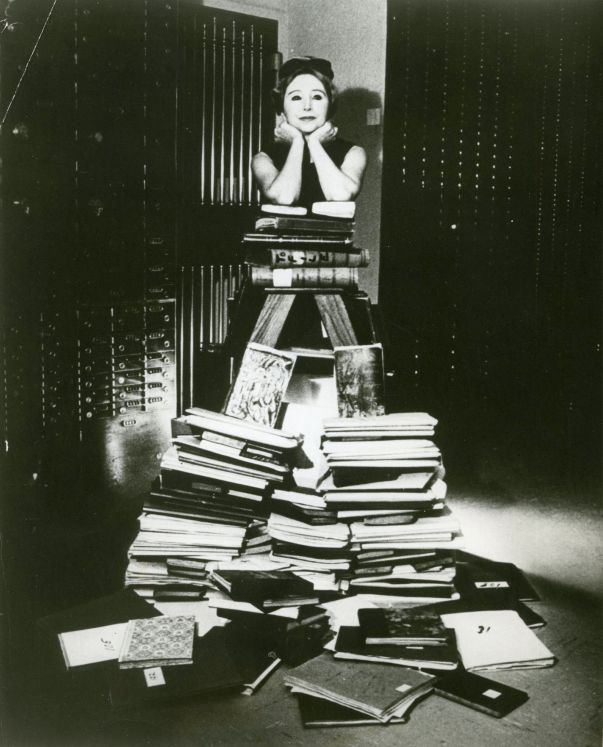
Anaïs Nin and her Diaries in a Bank Vault
You by Caroline Kepnes When my sister messaged me to share that she was watching a certain show on netflix and she wanted me to watch it as well, so that we could hate all of the horrible characters together…of course I was on board in an instant, as hating awful people with someone you love is one of life’s great bonding experiences. I inhaled it, despite the fact that her request came with trigger warnings and content warnings: it was a show about a psychotic/sociopathic (??) stalker, and she was worried that because of some past issues and trauma I have dealt with, it might not be a great watch for my overall mental health. Which…it was not at all, by any means, healthy for me to watch, but hating on these awful characters was so much fun that it completely trumped caring for my emotional well-being, and I watched it anyway.
(The main character, by the way, is played by Penn Badgley–Dan from Gossip Girl–the setting is somewhere in NYC, and the characters are all frivolous and ridiculous, so the whole time I watched, I just kept expecting smug voiceover narration from Kristen Bell in her Gossip Girl voice, along with extravagant, utterly luxurious brunch spreads.)
I soon realized that this dumb show was based on a book, and so of course, I had to subject myself to even more if it. I read it in the course of an afternoon, and it was equally as trashy and silly as the show. The plot, for me, was a little scary because while it sounds like this stalker is really over the top and goes to a lot of trouble regarding the object of his obsession (hacking her email and social media accounts, breaking into her home, pretending to be someone else online so that he can get information on her from her friends, etc.) and it sounds like these are really outlandish things that are a lot of work, and who has that kind of time, right? No one really does that, right? I’m here to tell you, I know one person who did. And they did it to me. So if you think this is happening to you–don’t worry if you sound crazy or paranoid. People actually do this crazy, fucked-up shit. Sometimes, in my darkest, loneliest moments, I worry that it still may be happening, even now. But…I still devoured this stupid book anyhow. Aside from the fact that sometimes it’s lovely to lose your afternoon to stupid enjoyment, I am at the point in my life where I don’t want to ignore the things that scare me. I know this was a work of fiction, but maybe it’s smarter to know your enemy, than to stick your head under the sand and pretend this stuff doesn’t happen.
Some spooky horror stuff: The Siren And The Specter by Jonathan Janz was a lurid, layered haunted house/ghost story, and that particular flavor of sleazy and deranged reading that used to titillate the heck out of me when I was about eleven years old. I would stock up on the cheap horror paperbacks with the craziest covers from the local used bookstore, stories that aroused feelings of both repulsion and obsession that I’ve never since recaptured until reading this book; Kill Creek by Scott Thomas is another haunted house tale, one in which a handful of modern masters of the horror genre are invited to stay for an evening for some sort of internet publicity stunt, and the usual sort of thing ensues. That’s a really lame review; I don’t actually remember it all that well, but I mention it because I hear Showtime is picking it up, so if you’re into this sort of thing, you may want to give it a read before it airs! I devoured In The House In The Dark Of The Woods by Laird Hunt over the course of an afternoon from a flight back from NYC; this witchy woodland fever dream of a tale, set in colonial New England, is utterly immersive and twisty and strange, and I loved every moment of it. And if you like twisty and strange, When I Arrived At The Castle by Emily Carroll is a deliciously eerie, magnificently illustrated, Gothic horror fairy tale nightmare-poem with the twisty and strange dialed waaay up.
We Sold Our Souls by Grady Hendrix I wish I could have read Grady Hendrix’s We Sold Our Souls when I was 15 and heavy metal was the only thing my weird, lonely heart understood. But time doesn’t work like that, so here I am now, reading a horror-enveloped love-letter to heavy metal music at 42 years of age, and damn if it didn’t throb & thrum my heart in the same thunderous, fearsome ways. I’m a little biased, I suppose. I have loved just about everything Grady Hendrix has ever written; and while know I can always count on him for ridiculous hilarity (even and especially when it comes to horror), what I was not expecting was something so incredibly heartfelt. The story: decades after her rock-n-roll band was on the cusp of their “the big break”, main character Kris Pulaski is barely scraping by, toiling away at her dismal hotel job, and definitely not playing her heart out with the music she loves anymore. What happened that night, that strange distressing night so long ago, when the band was teetering on the brink of greatness? What pervasive evil has insinuated itself into the lives of her former bandmates and is pursuing her to the brink of madness? We Sold Our Souls is a thrilling extravaganza celebrating the enormous power of music, as well as a bleak reckoning with the consequences of “selling out”…and possibly losing your soul in the process.
Meddling Kids by Edward Cantero A tongue-in-cheek horror-comedy mixture of Lovecraftian cosmic horror and Scooby Dooian hijinx, this was a quick, silly read that I couldn’t totally find myself immersed in because I had a real problem with the author’s specific use of similes and metaphors. Which, I KNOW, I can’t pick on someone else’s writing (or editor, I guess) when I am not exactly sure that I even know the difference between the two, but I found the author’s use of wink-wink nudge-nudge pop culture-y type comparisons and analogies awfully irritating and gross, and every time I encountered one it took me just a little bit more out of a story that I might have otherwise enjoyed. Or maybe not, and here’s my second issue with the book. This story is full of references; it’s definitely meant for the horror geek who delights in their knowledge, but whereas the heavy metal mentions and allusions in We Sold Our Souls just felt…right…all this bludgeoning me over the head with teen detective references and genre nostalgia sort of felt like the neckbeardy masturbatory nonsense of Ready Player One. OK–maybe not THAT bad (I really loathed Ready Player One) but it was getting close to that sort of twaddle. And yet, all of my unkind complaints aside, it was sort of a fun story along the lines of “the old team coming together to solve one last mystery!” and all of the twists and turns along the way. So, I guess I don’t …totally…not recommend it?
The People In The Castle: Selected Strange Stories by Joan Aiken –I have been meaning to read this Joan Aiken collection since June of 2016, when I had allotted it, among others, for my summer reading stack. Of course in 2016 I was still catching up on my 2014 reading, so it stands to reason that I’m just now getting around to inhaling this marvelous book of tales. It’s got an intro from Kelly Link, whose brilliant, peculiar writings I love all too well, and if that doesn’t sell you right off the bat, I will tell you that when I read the first story in The People In The Castle, I thought, “ah, so then, this is sort of a cross between Roald Dahl and Leonora Carrington!” In further exploration, however, I found that Aiken’s imaginings are not the sometimes frustratingly surreal flights of fancy that Carrington composed but rather earthier, more practical things. More realistic? No, I would not say that at all, and thank goodness! There are ghost puppies and exotic magics and infernal orchestras galore–but they are experienced by people very much like you and I, living out their lives–people with families, with work situations, people with hopes and dreams, and minute, daily dramas. There’s a subtle but really wonderful humor present in these stories, which prompted the Roald Dahl comparison, but where I think his stories sometimes have awful and unhappy (but kinda funny) things happening to people (and granted, they are sometimes awful and unhappy people) there is a tinge of something sly and dark in his narratives that I don’t find at all in the selections I have read by Aiken. Instead, the tone seems to me one of bright, lively, and benevolence, and coupled with that enchanting thread of dream logic that runs throughout these stories, sometimes glinting brightly, sometimes so faint that it’s but a winking phantom gleam–it is likely these are gentle, magical romps that you could read to children. Except, in several of these vignettes, I will admit, I felt that there was something going on that I didn’t quite understand…something of some importance that lay just beyond my grasp. That, too, is part of their charm, and who better than a child to perceive this and yet still be totally okay with it? Sometimes not everything makes sense. And most times, that’s where the magic lies.
The Vanishing Princess by Jenny Diski After reading this book of delirious interludes I’ve begun to think of Jenny Diski as Joan Aiken’s spiky, sexy, cynical cousin; Diski’s stories are not the gentle, magical romps from Aiken’s magical realist bag of tricks, but rather feel like more adult enchantments, strange pleasures and dreams, denied or deferred, or which at the very least frequently don’t manifest as hoped or planned. Short Dark Oracles by Sara Levine is a wonderfully clever collection of playful, self-aware, and charmingly awkward story/fables. The Only Harmless Great Thing by Brooke Bolander isa heart-wrenching alternative history of devastating rage, radioactivity, and elephant song, is a compact story that is by no means a quick or easily forgotten read. And The Taiga Syndromeby Cristina River Garza follows an ex-detective’s feverish, poetic quest to find a woman who has run away from her husband to the forbidding boreal forests of the taiga, and who may or may not want to be found.
Caitlin McCarthy
The Gentle Art of Swedish Death Cleaning: How to Free Yourself and Your Family from a Lifetime of Clutter by Margareta Magnusson.Because I am a contrarian (and also because I had zero interest in organizing or de-cluttering) I have been ignoring Marie Kondo and her KonMari madness for years. I like my stuff, thank you very much, and I really have no wish to get rid of it. (“Likes her stuff, and does not like change”– I will give you one guess as to my sun sign!) I recall, though, when this book was released a few years back, I was vaguely intrigued …by the name, at the very least. If I had to choose between the two, which is a tad unfair because I haven’t read the KonMari one, I would point you instead to this 80-something year old woman’s infinitely practical and wonderfully charming thoughts on a sensible way to deal with your possessions as you approach your later years. Less about “sparking joy” than it is, “do I really want my family to have to take care of this shit while they are grieving after my passing?” I related to and internalized her ideas immediately. After having dealt with the deaths of my mother and my grandparents, I have more experience than I would like with cleaning up the messy remnants of someone’s life, while at the same time, having to reconcile myself to the fact that they are no longer around to ask, “hey, what do you want me to do with this stuff?” Knowing what I know know, having gone through that process myself–I would never do that to someone. It’s too much to ask, don’t you think? Read this book. Get your shit together. And then get rid of it.
Gulp: Adventures on the Alimentary Canal by Mary Roach. I am super late to the writings and ruminations of Mary Roach and I am cursing myself for wasting so much time. She writes in that murky intersection of the disgusting, the taboo, and the intensely fascinating, and sheds her unique light on what she uncovers there. I’m just going to say it: Mary Roach is the kind of writer I aspire to be, or at least I would, if I wished to put any real effort into my writing and I wasn’t so afraid of failure. Her boundless curiosity, sly humor, shrewd understanding of her subject matter, along with the clever, cunning language she employs in conveying the information she has uprooted, has endeared her to me in a way that I am not certain that any other author ever has. If there is a question to be asked, no matter how weird, or gross, or unthinkable–she is going to dive in and get an answer for it. I have a keen admiration for journalists and writers, who, when interviewing a subject, can simultaneously digest the answers provided by the subjects of their queries, and race to make connections with these responses and from them to extrapolate parallel lines of intriguing query–and in doing so, suss out further explanations and implications and answers that you might not have even expected (or wanted!) For example, from Gulp, a book exploring our bodies’ mechanism of eating, digestion, and elimination, how can you not admire this exchange between Roach and Betty Corson? Corson is a Beano staff member who shared with Roach a few details on the kind of people who called the Beano Hotline– for various problems of a gassy and flatulent nature–and which led to the following exchange:
“Why not just avoid legumes? Some people can’t, said Corson. I challenged her to provide a single instance of a human being forced to eat beans. She came back with “refried-bean tasters.” They exist and they have called the hotline. Can you imagine?”
Refried bean tasters! They exist! Of the numerous tidbits of information contained in this book, like so many pieces of corn that pass through your digestive system to wind up…well…you know where…this bean info is actually one of the least disgusting you’ll learn about, but oh, man. Stick around for the rest of the journey. It’s a wild ride.
I Am Behind You by John Ajvide Lindqvist I am not sure if I should call this horror, or mystery, or what, but I Am Behind You is a surreal, thrilling story that begins on a perplexing and preposterous morning as campers in their caravans awaken to realize, with sinking stomachs and mounting terror, that where they awoke is not quite the same place as where they fell asleep. Packed with uncanny atmosphere, high tension, and characters haunted by more than just their current circumstances, I Am Behind You shows us a place where nightmares are real, events have no explanation, and places no longer exist. What does one do in such a disturbing situation? That’s where the idea gets interesting, while we inhabit each character’s perspective as they struggle with their eerie predicament. If you like a straight-forward, clear-cut ending, you may find this a frustrating read, but apparently this is the first in a trilogy, so perhaps more answers are forthcoming!
Homegoing by Yaa Gyasi if you enjoy stories like Pachinko, an epic, sprawling saga about Korean immigrants living in Japan between 1910 and now, then I think it is safe to say you will enjoy Homegoing as well. A breathtaking, emotional, multi-generational tale of a family split between Africa and America, this is a story rich and throbbing with both compassion and misery, and characters who desperately, fiercely live and love in the fleeting glimpses we see of them, in these chapter-long vignettes where time and history, politics, history, and gender interplay. A tale that plays out over many lifetimes and is o doubt is inspired in part, by the question asked by one of the book’s 20th century descendants:
“You must always ask yourself, whose story am I missing? Whose voice was suppressed so that this voice could come forth? Once you have figured that out, you must find that story, too.”
Frankenstein in Baghdad by Ahmed SaadawiVictim or villain? Truth or tall-tale? It is never completely one or the other. “Isn’t life a blend of things that are plausible and others that are hard to believe?” muses Mahmoud, a journalist caught up in a story he cannot reconcile in his wildest imaginings, and yet one in which he is living every day. Frankenstein in Baghdad, a modern, satirical adaptation of Mary Shelley’s gothic classic, is a novel of contradictions and gray areas and what it means to be human (or not-quite-human) living in this contradictory world and navigating these gray, uncertain spaces. One of the book blurbs mentions “the terrible logic of violence and vengeance” and this perfectly encapsulates the unrelenting everyday horrors of a rubble-strewn city in the midst of war, as well as the monstrous creation borne of that violence, now stalking its midnight streets and a exacting brutal revenge.
Washington Black by Esi EdugyanYoung George Washington Black, “Wash,” a slave on a Barbados sugar plantation, is taken somewhat under the wing of a new master’s eccentric brother, Christopher. A tragedy occurs, one for which Wash will surely be blamed, and both he and Christopher (or, “Titch”, as his family calls him), escape via Titch’s experimental hot-air balloon contraption. Thus begins a series of world-spanning journeys for a pair whose paths and fates would seem linked at this point, but for Wash, the endeavors are tinged with confusion, desolation, and despair, as he comes to realize that Titch, the only person he has left in this world, would appear to be trying to escape from him. Wash, sometimes doomed and despondent, sometimes emboldened and blazing with spirit, continues to endure, to strive, to propel himself forward–whether as part of forging a future life for himself, or to find Titch again, and demand the answers that plague him, from the past that shaped and formed him–maybe both. I couldn’t put this book down. It was agonizingly beautiful and soul-crushing and exhilarating. It was exhausting. I can’t recommend it enough.
Giant Days Volume 9 If you’re not already reading about the university adventures of chums Esther, Susan, and Daisy, then I envy you immensely the experience of discovering these delightful characters and their adventures as they navigate friendship and love and responsibility, while trying to pass their college courses, find housing and jobs, and figure how who they are and what they want their lives to be.
It’s difficult for me to talk about Giant Days without getting all choked up and emotional–these characters are the labor of love of John Allison, the artist who created Scary Go Round, the first web comic I was to ever discover, back in 2003 or so, and whose works as they grew and changed and evolved, are actually only web comics I still read. Described as “postmodern Brit horror”, Scary Go Round follows the hapless denizens of Tackleford, a fictional British town beset by all manner of supernatural activity including, but not limited to: zombies, space owls, the devil, and portals to other dimensions. Though Scary Go Round ended in 2009 [note: it periodically picks back up again!] a few of Allison’s beloved characters moved on to Bad Machinery, which picks up in Tackleford 3 years later. The focus is on an entirely new cast of sleuthing schoolchildren attending Griswald’s Grammar School, whose well-intentioned energies may cause more problems than the mysteries they solve – but they throw themselves into it all with much vigor and aplomb.
It is from these stories that Esther, Susan, and Daisy emerge, and I am only telling you all of this because you have so much to look forward to reading, between the ongoing Giant Days series, and the previous two web comics! Marked by clever, peculiar dialogue, absurdist humor, dotty characters (and delightful fashions), Giant Days is so much fun, and I want you to come back to me right here and tell me how much you love it, after you get started.
Re-reading some haunted house books! The Haunting Of Hill House by Shirley Jackson was an imperative re-read and a palette cleanser after my experience with the Netflix series. I did not love the show for many reasons but most of which because all of Jackson’s elegant, powerful symbolism was reduced to “easter egg” status. I won’t spoil it for anyone who loved it, or who hasn’t yet seen it, so that’s enough of that. And if I am going to read of Hill House, then of course I must re-read Richard Matheson’s pulpy, lurid Hell House for comparison.
At first glance, they are somewhat similar–a small group of people, mostly strangers to each other, congregate for research purposes in houses known for their haunted histories. But Jackson and Matheson’s treatments of this spooky trope are so very different, and I really urge you to read them side by side for the differences in tone and language, the whos and whys of the characters and how they interact and relate to each other (or not), and to see how each story evolves and diverges. Interesting to note, if you are not already aware: Richard Matheson is also the author of I Am Legend, What Dreams May Come, A Stir Of Echoes, and the Twilight Zone episode “Nightmare At 20,000 Feet”.
666 by Jay Ansonand The Manse by Lisa Cantrellwere two used finds that I picked up while visiting Phantasm Comics in New Hope, PA. Lured in by their ridiculous covers, I devoured both on the flight home; In 666, our main characters, a married couple, arrive home from vacation to find that a new house has somewhat mysteriously appeared more or less across the street from their own home. We learn from vague visions and various forays into the house that this structure is evil because it was built from various pieces of diabolical or horrific materials throughout history? (i.e. pieces of torture devices, stones from notorious dungeous, nails from the cross Jesus was all got up on, etc.) I’m probably oversimplifying, and this is already a dumb book to begin with. Anyway, this house reappears and disappears over the years after inciting its inhabitants to dreadful violence. Somehow the devil is involved. The devil is a realtor? Or a house flipper? I don’t know. One amazon reviewer enthuses, “Every christian should read this book”. OKAY THEN!
In The Manse, some self-important small town JCs (junior chamber of commerce members) decorate a local historical space–an old house owned by two doddering spinsters tucked away in a local ALF– every year for Halloween and make enough money from their haunted house doings to keep the old place afloat for another year. But! The house is apparently situated over a portal to hell and feeds on the fear generated by these annual Halloween shenanigans, and by its 13th year, its saved enough fear-bucks to do something big. But…what exactly? I am not sure. Hell’s grand opening, with lots of samples, like a Saturday afternoon at Costco, maybe? I feel like these vintage paperbacks are always sketchy on the details of whatever the titular Big Bad is actually trying to accomplish. The Manse, much like 666, is awfully silly, but the cover art of a demonic jack-o-lantern intensely nomming on a cobwebby banister is actually pretty great.
Paradise Rot by Jenny Hval Norwegian multidisciplinary artist Jenny Hval has written a surreal debut novel full of gross words that you may have issues with if you can’t handle moist ooze, bubbles of spit, sticky crotches, or other goo-soaked situations or similes. If you’re all good with mucus, rot and pus, blood, spores, and urine, well, then. You’re in for a treat. In Paradise Rot we follow Jo, an overseas student studying in a foreign country, anxious and adrift in her new surroundings. After a week’s worth of fruitless and frustrating searching for housing, she answers an ad for a roommate for what we find out is actually a converted warehouse with a strange inhabitant, who has been living there alone. “In a house with no walls, shared with a woman who has no boundaries,” Jo experiences a soporific, psychedelic sexual awakening as her surroundings decay and fall apart around her.
Hungry Ghosts by Anthony Bourdain I, sadly, became more a fan of Anthony Bourdain posthumously, and it really began, if I am being honest, when I learned that he had cooked up this illustrated collection of eerie food tales steeped in Japanese folklore and legend. The book opens with the story of a Russian oligarch who, in the middle of his dinner party, invites the chefs working in his kitchen to play a version of 100 candles, or Hyakumonogatari Kaidankai, a Japanese Edo-period parlour game in which brave samurai would try to one-up each other with terrifying tales of ghosts, demons, and unspeakable beings. In this version, however, it is the chefs who share these dark and gruesome tales about food and hunger, with each story taking inspiration from the many horrors found in Japanese mythology. “ Generally speaking, I always want more from these types of anthologies than they are able to deliver, but this one was a lot of fun, and more successful than most. Recommended if you liked Zac Davisson’s Yurei: The Japanese Ghost.
Junji Ito’s Frankenstein I’m not sure how much I really need to try and sell you on this one. If you like Junji Ito, then you know you need his grotesquely illustrated Frankenstein for your collection. And if you dig Mary Shelly’s gothic classic, Frankenstein, then you probably want to see this bizarre Japanese illustrator’s take on the beloved tale. Bonus: Frankenstein only takes up half of this hefty tome–the other half features the many misadventures of Oshikiri, a high school student who lives in a decaying mansion connected to a haunted, parallel world. Oh, you’ve not heard of my favorite illustrator, Junji Ito? Have a read of “The Enigma of Amigara Fault“, a story which I think is pretty representative of the tales he likes to tPostell, rife with themes of body horror, obsession, helplessness, and mystery– and I guarantee you’ll be able to gauge for yourself right away if his work is something you’ll enjoy. Also, Junji Ito, can you pretty please illustrate an edition of Oscar Wilde’s The Picture of Dorian Gray ? I haven’t read it yet, and yours is the version with which I wish to initiate myself! (Don’t give me a hard time! I’ll read it one day! It’s on the list.)
Bad Gateway by Simon Hanselmann Ooooof. When you strip away the spiteful laughter and the uncomfortable chuckles of the previous Megg & Mogg books (one of which, Megahex, I have written about previously–don’t get me wrong, I adored it, and I laughed at that one, too) you’re left with the bare bones of depression and mental illness and addiction and self-harm and a bleak, unblinking gaze at your trauma and terrible behaviors. Where do you go once you’ve hit the bottom of the bottom? If anyone could fall further, it’s this gang, and yet, I am hopeful that is not the case. CW: everything.
A Hawk In The Woods by Carrie LabenRecommended as a “best of 2019….so far” by Jack over at Bad Books For Bad People,A Hawk In The Woods was described as a “Lovecraftian sister road trip,” and OK, yes please–sign me up! Abby and Martha are twins from a weird family with weird powers and are desperately headed to the family cabin after Abby breaks Martha out of prison. Are Abby’s reasons for rescuing her sister entirely unselfish? Absolutely not. As we follow the trajectory of their journey, the timelines slips from past to present and we get a glimpse of the reasons they each wound up where they did in life, and where that path will ultimately lead them. There was so much about this story to love: the sister’s relationship, the creepy family backstory, the powers that the twins possess (Abby uses people’s energies to bend those individuals to her will, and Martha can fold time) and the only complaint I have sort of spoils an important aspect of the story, so I’ll keep mum on that point. Just…pay attention to who the characters are, and what you think you know about them. Things can get a little confusing.
The Poison Thread by Laura Purcell. I won this book in a GoodReads giveaway! I swear I get emails from GoodReads every other day about how this, that, or the other book on my to-read list is now available and they are giving away 50 copies of it, or something like that. And honestly, you won’t catch me entering a lot of random internet giveaways, but it just seems like sooner or later between the frequency of them and the amount of stuff they give away, you are going to win something from GoodReads– so why not? Seriously, just enter them every chance you get; you’re bound to luck out at some point. The Poison Thread (aka The Corset; I am not sure why they changed the title) is the second book I have read by Laura Purcell and I was so very excited about it because I thoroughly enjoyed the first I’d read by her, The Silent Companions, a book which genuinely freaked me out . In The Poison Thread, the narrative is split between two women in Victorian England; Dorothea, a wealthy heiress, and Ruth, an impoverished seamstress imprisoned for the murder of her mistress. After the death of her mother, who contracted a bit of religious mania before her slightly suspect passing, Dorothea, or “Dotty” begins visiting women in prison, among other acts of charity– and I’m not quite sure if it’s to honor her late mother’s legacy or an excuse to practice her newfound fascination with phrenology. This seems an odd, throwaway theme in the greater scheme of this tale–I think you could swap in and substitute any faddish psychoanalytical nonsense from the era and it probably would not have made much difference to the story. Dotty becomes singularly obsessed with Ruth, who believes she has killed via transference of her malice and rage through the power of needlework. This is perhaps more “gothic suspense” than “gothic ghost story”, although that thread of the supernatural does lurk throughout, even it if may only be in Ruth’s mind. But it’s an utterly riveting and twisty novel and I’ve been recommending it to everyone I know. If you’ve read neither The Silent Companions nor The Poison Thread, grab them both as we head into September and I assure you that they will make incredible early autumn reads.
The Collected Schizophrenias by Esmé Weijun Wangis a book that I started earlier in the spring and finished in May and I’m still not certain how to even begin to tackle the material. I feel funny saying that I “enjoyed” a book that personally chronicles a woman’s exhausting experience with psychosis and a perpetually shifting reality, but in truth, I did tremendously enjoy it. Or, rather, it feels more human to say I enjoyed learning more about what it is to live with schizophrenia, a diagnosis that has always both intrigued and terrified me in equal measure, I suppose, because of the streak of mental illness that runs through my own family. Intimate, candid, and immediately compelling, these vivid, tangled essays provided perspectives into both chronic and mental illness and insights that were surprising, terrifying, but also wonderfully illuminating, sometimes even quite empowering.
I spent two weeks in the psych ward immediately following a suicide attempt when I was 28 years old; my memories of that time are a collection of amorphous moments of cloudy despair alternating with slices of razor-sharp fury and crystalline focus. I was not experiencing a psychotic break; I wasn’t hallucinating, my reality wasn’t (exactly) fracturing–my experience was not even close to that of the author’s, but I wasn’t myself while I was there. I had a very hard time finding my way back. In the course of these writings, the author shared some things that helped her when she felt herself starting to slip, and I feel that had I access to such ideas, they might also have helped me. When she starts to feel the onset of what she describes as a sort of psychic detachment, “episodes that preclude psychosis, or even mild psychosis–the episodes in which I must tread carefully to keep myself where I am,” she implements small, symbolic systems of defense or spiritual safeguards that have a connection to the “sacred arts”. The solace granted by these practices is not through the beliefs accompanying them, but rather the actions they recommend. “To say this prayer–burn this candle–perform this ritual–create this salt or honey jar–is to have something to do when it seems nothing can be done.” If the delusions come to call, she has a ribbon she will tie around her ankle: “If I must live with a slippery mind,” she muses as the last essay concludes, “I want to know how to tether it, too.”
The Word Pretty by Elisa Gabbert. I like books in which people spend time thinking about things; especially when it’s the writers themselves thinking about things, and even more so when those things being pondered are related to their craft. They are the kinds of conversations and connections and observations that I’d like to share with people, if I weren’t so self-conscious about sharing (or having an opinion or talking to people at all…) and so instead I read about these internal conversations in the form of brilliantly inquisitive and obsessive essays, written by other people. Even on the subjects and anecdotes I related to or connected with, though, it was on the level, I felt, of a lower life form. Elisa Gabbert writes like the accomplished, sophisticated interesting-in-all-ways person that I wish I was, and I felt like I was an amoeba trying to relate to some sort of higher being, complete with halo and wings. Even if I thought I was relating exactly to a particular thought, was I really? Would I even know, middling mediocre hack that I am? The more I read, the more unsure of myself I grew…and yet, I could not stop reading. Elisa Gabbert, I am sure that you are a very nice person and it was not your intent that I feel this way. I loved this book, even though I did not love the way I felt about myself when I read it.
Mouthful of Birds by Samanta Schweblinis apparently “far too bewildering” for one reviewer on Amazon and if that’s not your thing, then you may want to skip this slim book of surreal, unsettling stories. To be fair to the stories, though, I think this reviewer might have had a very low tolerance for the bizarre. There are no happy endings (and very few happy beginnings or middles) and really, several stories don’t even quite have a proper ending, happy or otherwise– rather just an abrupt stopping point or a vague notion that the story may continue forever, whether or not we are still present and reading. Many of the tales are dark and violent, brutal and heartbreaking, but the one I loved was not particularly shocking or tragic. It involved the theme of familial bonds: one adult brother’s bemused and at times perplexed recounting of another brother’s depression, in the midst of a family that seems to be thriving and in which everyone else appears to be hunky-dory. I don’t think I’m remembering it exactly as I read it, but at one point, in a brief and sudden flash, the successful brother, at a family barbecue full of mirth and merriment, experiences an unexpected moment of (was it sadness? anxiety? maybe more of a nothingness? A nothingness that might last forever? I can’t recall) but I remember feeling… vindicated, and a bit vindictive, when my first thought was “so then…now you know how it feels.” I’m neither a masterful enough reader nor writer to say if that was a bit of subtlety on the part of the author, or if she aggressively smacked us over the head with the notion, but I felt what I felt, and I loved that profound punctuation in what was otherwise one of the more reserved, not particularly ambitious feeling stories in the collection. It elevated it somehow, to something extraordinary.
Crazy Rich Asians by Kevin Kwan. Sometimes I like to read trashy books. And when there are obscenely rich people in the story, spending their money in stupidly extravagant ways, that is the maybe best kind of trash. It’s particularly good for in-flight reading. I usually leave these books in the lodgings I stayed at, for someone else’s trashy enjoyment. You can find my copy of Crazy Rich Asians in the bar of The Rosemary hotel in L.A.
Mongrels by Stephen Graham Jones I first read Stephen Graham Jones (Mapping The Interior) in September of 2017–again, during a hurricane! It’s become a bit of a tradition, I guess. I was under the impression at the time that he was a new author and that was his debut novel, but I couldn’t have been more wrong; he’s a very prolific writer and has been at it for quite a while now. Mongrels is a surreal werewolf coming-of-age tale; it’s violent and beautiful and brimming with odd moments of absurdity and heartbreaking tenderness and tragedy. It is one of my top ten…no, make that one of my top five favorite books of all time.
In The Dream House by Carmen Maria Machado. In seeing initial reviews about the brilliant structuring of this vulnerable, spellbinding memoir of abuse, I grew wary, worrying that it might in some way be above my intellectual paygrade. And though it is framed through the analysis of popular horror tropes and footnoted with scholarly snippets regarding folk & fairytale motifs, I needn’t have worried–trauma transcends literary conventions.
I read In The Dream House compulsively; that is to say I dreaded every single word of it, but I inhaled them heedlessly and headlong, not unlike watching a scary movie through the shadowed, in-between slants of our joined fingers as we hold our trembling hands before our eyes. In the story of someone else’s hindsight we re-experience our own humiliations and hurts, our own abuse and trauma, and that too I dreaded. But I craved it, as well. Sometimes I doubt what happened to me, and I seek out these types of memoirs. I want to see my trauma appear large as life in someone else’s story. In a painful grip, or a hateful word, a whispered threat. An unwanted touch, a violation of self that transcends the physical act to such an extent that you almost feel you need to scrub your very soul of it.
I don’t want these things to have happened to someone else. Never ever, not in a million years. But when confronted with someone else’s story, I encounter mine, and I am glad that I am not alone. I don’t want to look. I can’t look away. In the Dream House is a book you dare not look away from.
The Memory Police by Yoko Ogawa. Is it possible to both fall in love with a book and want to pretend that you never read it? That it had never been written? That the idea never even existed in the author’s mind? That line of thought is somewhat in keeping, I suppose, with the premise of this quiet, surrealist dystopian drama: on an unnamed island, things and objects are disappearing. The characters wake up one day, and, for example, fruit has disappeared. I don’t think the fruit literally disappears, but rather the idea of fruit. When a disappearance happens, and the villagers become aware of it, they just take all the fruit and dump it in the river. By the end of the day, fruit has ceased to be, even in their memory. The Memory Police ceaselessly monitor the inhabitants of the island and ensure that what has disappeared remains forgotten.
A feeling of dread is pervasive throughout the entirety of the novel, and yet it never seems tense–the islanders seem resigned to the disappearances in a frustratingly apathetic, good-natured, “oh well!” sort of way. There are those among them, though, who don’t forget. It is through their dismay and anxiety regarding the disappearances (what happens when, say, body parts start disappearing?) and fear of the Memory Police (who arrest non-compliant citizens in the middle of the night, and no one knows what happens to these friends and neighbors) that we experience these concerns. We can’t rely on the protagonist for this–she’s too passive for reflection or much in the way of active resistance, even as her career is brought to a close by the disappearance of books (she was a novelist), even as her own limbs begin to disappear. The Memory Police presents such an upsetting concept that I cannot contemplate it overlong. Not that of state control–which ok, that’s pretty bad, I get that– but of the absence of memory. Words like “terrifying”, or “haunting”, or “sad”, just don’t cut it. This book is upsetting. I wish I hadn’t read it. But oh my god, how glad I am that I can’t forget it.
Outakes from a series of self-portraits of Eva Green for Soho House.
Frankisstein by Jeanette Winterson was a wildly inventive, wonderfully clever, deeply philosophical gem that I am going to be pondering for a very long time, and though it’s a few weeks too early to make any “best-of” declarations (and I’ve got loads more reading to do before December 31st) I think it is safe to say that Frankisstein is going to be near the top of that list. The parallel, temporally fluid stories of both Mary Shelley, dreaming up and penning the tale of her infamous monster, and Ry, a young transgender doctor in modern Britain, who meets and falls in love with Victor Stein, a professor and professional TED talker on the future of AI–and I’ll say no more. I think this is a book you best dive into knowing little, forming your own musings and reflections. I will add, though, this: at some point in the story, Victor softly asks of Ry “…have we met before?” And with that, I experienced the most spendidly delicious shiver, the echoes of which I can still feel when I think on it now.
Body Horror: Capitalism, Fear, Misogyny, Jokes by Anne Elizabeth Moore. It sounds a little childish to call someone a “great thinker” (I used to call my grandmother a “good cooker,” for example. When I was five. ) but these essays on the “gore of contemporary American culture and politics” in relation to the female experience are surely written by someone of capable great–no, make that brilliant–thought. She draws fascinating parallels and somehow ends up connecting concepts such as Standard Time and the time that the unwell need as opposed to the healthy; the choice not to bear children, the cultural imperative to reproduce, and the gendered imbalance of intellectual property rights, and the plight of Cambodian garment workers, a heartrending piece of writing that requires no connection to anything else at all.
I loved how Moore’s writing lends to meandering ruminations–nothing so difficult to follow as “stream of consciousness,” but there’s also nothing at all resembling a rigid structure framing these words. They’re more a disciplined ramble, perhaps with some surprising jumps that she makes in terms of logic and connections, but they are not in the least unbelievable. Moore is an excellent guide through her thoughts, disparate as they may appear at first, and you can see how to got to where she went with each topic. Body Horror was full of uncomfortable, painful ideas and truths, but was it was also powerfully edifying and felt vital and fierce.
Ration by Cody T Luff Full disclosure: Ration was sent to me as a review copy. I don’t regularly receive review copies of things, but I love that someone came across a story or an author that I might be into and was keen to send it my way. That level of thoughtfulness in these kinds of sometimes rote-feeling PR endeavors means a great deal to me, and so one might be forgiven for being under the impression that because of this I was predisposed to think highly of the book, but truly–I had no expectations! Expectations or no, I was incredibly impressed. Described as a “women-led Dystopian piece about surviving in a hunger-regulated society” Ration was a tense, gut-twistingly visceral tale that was heavy and harrowing, and emotionally difficult to read (in the way that The Handmaid’s Tale is heavy and hard to read) but at the same time, thoroughly compelling. I could imagine Ration as a gripping miniseries–the characters and their interactions really were that wonderfully and terribly, vivid–and I could have spent a great deal more time in their bleak, ravaged world. I look forward to reading more by Cody T. Luff and I expect that Ration is going to be on several “best of” lists for the year. It certainly will be on mine.
Fake Like Me by Barbara BourlandA thriller set in the art world and a “love letter to the labour of artmaking,” Fake Like Me was a fantastic read that I tore through in one day and a story that hit so many of my sweet spots. I am a super boring person with a 9-5(ish) job because I crave security and stability and routine–but I am intensely fascinated with artistic creatives who live bohemian, unconventional, vagabond lifestyles. I would like to do this! But I am shy and squirrelly and don’t want to have crazy artist parties and I also like a steady income! Fake Like Me combines a thrillingly immersive examination of the lives and deaths of a handful of intertwined fictional artists, along with something that Sonya has mentioned before here in Stacked at Haute Macabre–their preferred genre of books is “non-fictiony fiction,” where the author “went down some kind of research hole that utterly fascinated them but, because they are a fiction writer and not, say, a journalist, turned their up-all-night discoveries into a story.” If any of this sounds like a good time to you, I think you’re going to love the arty insights and perspectives found in Fake Like Me. Also, don’t be put off by the name, which makes it sounds like it’s going to be a really fluffy read. It’s not.
Dead Astronauts by Jeff VanderMeer was a fractured, fragmented, timeshifting story of dissolving, surreal, decidedly-non-linear layers that I hesitate to even call a “story”. If you are familiar with VanderMeer’s writing, up the strangeness and beauty and WTF factors by ten or twenty or one hundred, and that’s Dead Astronauts for you. It was brutal and heart-rending and utterly confounding, and it eluded me at every turn. At no point did I get a clear sense of what was happening to whom or how or where or why, But. I also left every page that I turned damp with my tears. Something inside me understood something about these allies and their journey and their pain, and when it ended, I wept quietly for a few minutes, thinking, “but…I didn’t want this to end.”
Stephen King Project update: I have read The Dead Zone by Stephen King, which, if I am being honest, I had actually thought it was a collection of short stories before I checked it out of the library. A guy gets a few head injuries, goes into a four-year coma, and wakes up with premonitory psychic abilities. This book felt like old-school Stephen King to me, because I guess it is super old Stephen King thoughts and insights and stories. When I contrast it against something like The Outsider, which is much more recent, well…The Outsider feels like it was written for television. Some sort of essential Stephen King weirdness just…isn’t there. I am almost tempted to say there’s something simplistic and Dean Koontzian about it (sorry Dean Koontz fans, I am not amongst your ranks.) I don’t want to say it feels “dumbed down” because I don’t know that I’d ever considered Stephen King’s writing particularly nuanced! I mean…nuance and complexity… that’s not why we all fell in love with him when we were eleven years old, right? I don’t know if it’s the stories themselves, or the way the stories are told, but there was something missing for me. I’d love to hear some of your thoughts on this, my fellow Stephen King fan-friends. If you haven’t read The Outsider, maybe take a pass and watch the series instead, which is moodier, gloomier, more beguiling and much better than it has any right to be. Oh, and I also read Gwendy’s Button Box which I think was kind of fun and probably way more appropriate eleven-year-old-us, even though we wouldn’t have appreciated why until we became the old farts we are now.
A River Of Stars, Yosano Akiko. This is my go-to, treasured book of beloved poetry. I tell anyone that if they really want to know my heart, my secret heart, full of hopes and fears and loves and longings that I can never hope to properly express, then you must read these tanka and long-form poems by Yosano Akiko, a goddess of poetry and the embodiment of early-twentieth-century Japanese romanticism and feminism.
And now you must ask whether I’ve written new songs. I am the mythic koto with twenty-five strings, but without a bridge for sound.
Salt Is For Curing, Sonya Vatomsky. I loved this book before I loved its author, our very own Sonya Vatomsky. But like, only a few days before I loved them, because it was a head-over-heels affair with both book and human that all happened very fast, and now I can’t imagine my life without either! In reading Salt Is For Curing, it took all that I had not to devour this uncanny collection of spooky delights in one greedy instant. I feared that to do so, to ingest all of these potent magics– a fanciful combination of myths, metaphorical recipes, and cheeky spellwork– at once, would give me a terribly heartsick sort of heartburn and yet leave me with the very worst sort of emptiness, knowing there is no more to be had. I drew it out for as long as I could stand, and I unexpectedly found myself gorgeously stuffed full. But knowing both Sonya– and their writings– is to have a heart filled to the brim with weird magics 24/7. I wouldn’t have it any other way.
Sometimes A Wild God, Tom Hirons & Rima Stime. This small, unassuming booklet, brimming with beautifully potent imagery, was a surprise gift from a friend, and a really quite marvelous collaboration which flung open doors of wonder deep within my heart, doors that had been closed firmly shut for such a very long time. I’ll say no more. I wish for you to be surprised, too.
The Song Of Achilles by Madeline Miller. I didn’t think I could possibly love this mythic story more than Madeline Miller’s gorgeous retelling of the sorceress Circe’s tale…but I don’t mind being wrong. In The Song Of Achilles, the awkward and exiled Patroclus develops a hesitant friendship with the achingly beautiful Achilles, the glory-fated half-mortal prince. Miller’s heart-rendingly gorgeous account of their somewhat mismatched but intensely passionate companionship just utterly rips you in two, because you already know where their story is headed, and it’s nowhere good. Oooof. 10/10 tortured princes; I would read this story a thousand times over again, and cry myself sick, each and every time.
China Rich Girlfriend by Kevin Kwan.The second in the Crazy Rich Asians trilogy, this book was pure, dumb escapism. I love reading about unimaginably rich people spending their money in staggeringly stupid ways and the inanities and absurdities that ensue. This is especially good stuff if you enjoy haute couture-designer label-name dropping + head-to-toe outfit descriptions as part of that foolishness. Which I do!
Why We Can’t Sleep: Women’s New Midlife Crisis by Ada Calhoun. This book about Gen X existential angst was a real bummer, but there were so many relatable bits, not the least of which is that it’s always comforting, I guess, to read about people’s thoughts on my so-called disaffected and directionless generation–and yet, we’re the generation of women that was raised “have it all.” Calhoun has conducted over 200 interviews for the book and looks into data such as housing costs, HR trends, credit card debt averages, and divorce data and finds that most of us are exhausted, terrified about money, under-employed, and overwhelmed.
Some of the conversation in the book makes me feel like an outsider, looking in: I am not and have never been married, I do not have children, and I am not struggling to get ahead in a corporate career. I am not experiencing the same difficulties that these groups of people experience, although there are some similarities and overlap. In spite of that, there were some insights that deeply resonated with me. The author posits that we have been raised to believe that if we don’t care about everything, we are squandering opportunity, and this leads to a lot of pressure and potentially a lot of shame. We take basically good ideas and turn them into something with which to self-flagellate. (OMG do I relate to this.) She also discusses how we were set up to be in denial about what we go through as women; in entering the workplace fighting to be equal, we have had to quell what makes us different and how that affects us on such a level that we can’t even talk about it. And these silent anxieties? They are exacerbated by what we see on the internet, and we can’t look away. She notes that nothing seems to stimulate the economy like women feeling bad about themselves. She doesn’t remember our mothers looking like a million bucks when they were 40, so what the hell are we making ourselves nuts for?
I don’t think there are any real solutions offered within these pages, though. And while I am not sure that you’ll feel better after having read this book, I guarantee that you will feel seen.
Keepsakes, a series of short horror stories/comics about the strange and horrifying artifacts found by two siblings their late father’s creepy basement was something I read early this year (though I think I Kickstarted it last year) and which is exactly the sort of thing that is right up my alley. I fell in love with horror comics when I was six or seven years old, and discovered an old stash of Creepy magazines belonging to one of my super weird uncles. This sparked in me that bizarre and conflicted feeling of fascination/repulsion that is the hallmark of so many of my obsessions and enthusiasms, to this very day! Keepsakes, written by G.A. Alexander, is actually the creation of our dear Sonya’s husband, and I’m too shy to tell him how much I enjoyed it– so I am hoping that he will stumble upon my review here, and know this to be true.
The art and stories within the lurid pages of Keepsakes took me right back to that moment in time, frozen indelibly in my memory because it is just that formative for me: sitting cross-legged on my uncle’s dusty childhood bedroom floor, idly playing with monstrous rubber toy dinosaurs, when I questingly reached into what I thought was another toybox… and discovered within something else, altogether. My grandmother–my father’s mother–was an odd bird and kept her son’s rooms in the same state they grew up in, long after they moved out. Toys and everything! But what I found in that box, in those brittle, crinkly pages, were neither toys nor typical remnants of childhood playtime. Wracked with shivers and shakes which mystifyingly morphed into chills and thrills, I wrapped myself in a musty afghan, crawled into a corner with my back facing the wall (naturally, so that I could see anything that might have tried to creep up behind me) and utterly devoured scores of Creepy magazines that rainy, eerie afternoon. Keepsakes conjured in me those same shivers and thrills, that same sense of I can’t look/TELL ME MORE!
Many years later, I confessed this story to that particular uncle. To this day, every time we see each other, he presents me with an old Creepy magazine.
The Gunslinger by Stephen King I knew going into this one that it was not going to be my cup of tea, and I mostly wasn’t wrong, but I will admit that after a certain point I was drawn in despite myself.
Roland Deschain, last of the gunslingers, is following the enigmatic, malevolent Man In Black across a brutal desert. There are some bloody and terrible skirmishes and a small companion is met along the way. If I don’t seem all that jazzed in my description, I guess that’s because I never really got drawn into the story, or felt much of anything for the characters moving along in it.
The world in which this pursuit takes place seems very different from our own, and yet there seem to be some strange similarities…and I think that’s what I found most compelling. I want to learn more about the stage upon which this story plays out.
Everyone who seems to love this series of books goes on and on about the world-building, so I feel like there must be…something there? I’m hopeful that I will find out, as I have made it my mandate to read all of Stephen King’s books, so I’d be reading the next in the series whether I wanted to or not.
Real Queer America: LGBT Stories from Red States by Samantha Allen GLAAD Award-winning journalist, Samantha Allen, embarks on a road trip across America–her motto, “something gay every day”–to chronicle the unique experience of being queer in conservative communities. A memoir that is part travelogue and part recent history of queer America, Allen makes pit stops at drag shows, political rallies, and hubs of queer life across the heartland, and she introduces us to scores of extraordinary LGBT people working for change.
If I have a critique, it’s that she does spend some time attacking liberal coastal enclaves, those places that we might typically consider queer oases–San Francisco, New York City, etc.– as being too big, too expensive, too crowded, etc…and listen, I get it. I don’t really love those places either, for the same reasons. But something about hearing it over and over in the context of this book rubbed me the wrong way. But that is a very tiny complaint. I listened to Real Queer America on audiobook, as read by the author, and hearing in her thoughts and observations in Allen’s own warm, endearing voice added another wonderful dimension to what was already a profoundly insightful, informative, and moving series of essays.
Adipocere
Light Magic For Dark Times by Lisa Marie BasileIt has been a very long time since I have read a book like this. I read books about witchcraft and witches quite frequently. Spellwork and ritual is often a focus of the fiction I consume. But a practical guide of spellcraft and magical rituals for the purpose of performing, myself? I haven’t had anything like this in my possession, since…gosh. Maybe since I was sixteen years old, and at the risk of sounding dismissive (sorry!) I don’t a recollection of those books or authors presenting me with anything particularly smart or compelling. As a teenager… would I have even recognized it if they did? I don’t mean to make generalizations, but teenagers now seem loads smarter than they did back when I was that age. Or maybe I was just a dumb teenager.
At any rate, I think it’s unfair to review a book by talking about what it’s not. I don’t feel comfortable making comparisons like that, but I did want to give some background as to the last time I held in my hands a spellbook. Lisa Marie Basile’s Light Magic For Dark Times surprised me on every level. It’s relatable and sincere and compassionate, and as a terribly self-conscious person, I love that Lisa Marie’s book never makes me feel cheesy for reading it. It elevates beautiful sentiments in practical ways, it tackles ugliness in a welcoming, accepting manner, and it feels like sage, loving, advice from the depths of a wise, vibrant heart.
I am particularly appreciative that she delves into practices for confronting feelings of grief, rituals for trauma, meditations for getting one’s self comfortable with the idea of death; none of these things are fun to think about but they are so important to contemplate, to meet with, and to work through. There are also spells of celebration and creation, of self-love and of shadow work. This is such a beautiful little book of magical exercises for times of darkness and of light, and even the strange, liminal, grey areas in between. I am grateful that this book exists as a resource and I am certain that I will find myself reaching for it over and over again as I experience these shades and shadows, these light and dark times, in my own life.
The Picture of Dorian Gray by Oscar Wilde Hoo boy. How embarrassing to admit that until I was 43 years old, I had never read Oscar Wilde’s classic work The Picture of Dorian Gray! I received my copy of the book from a friend who has taught the book in the past, and so I was extremely privileged to find his notes and observations bookmarked over the course of the story. Of course, this makes it very difficult not to parrot his sentiments at you now, and so I will refrain from doing so, save to note this: “…his novel is one of pleasurable language, a triumph of aesthetics over literary realism.” AND HOW. I am pretty sure that Wilde wrote this story solely so that he could spend two chapters alone waxing ecstatic about embroidery and gemstones.
I think most folks know the plot and the themes involved, so I won’t give a synopsis, but I am left with a few questions. Dorian Gray is referenced by someone (I can’t recall which character) as being “bad as bad.” And yet we don’t seem privy to much in the way of his horrid exploits. I suppose if we fill in the blanks we’ll come up with what is personally most abhorrent to us, a “bad as bad” scenario that Wilde left up to the minds of the readers to concoct. I am also dreadfully curious as to what Gray is holding over Allen Campbell’s head; what did Gray’s corrupt influence incite Campbell to have done, or take part in, could be used as blackmail in that later scene? Details, man! Again, I suppose there is some elegance in the mystery of these things, but prefer them spelled out for me.
I suppose this is less a “review”, and more a “reaction” to the book, but there you go–my thoughts, such as they are. I thoroughly enjoyed both the story and the prose, but this is one that I think I will be turning over in my mind for many years to come, marveling at its myriad charms like the “broken rainbow of the milky opal” amongst Dorian Gray’s dazzling collection. But at this point if you were to ask me what this tale was all about, I could probably only shrug and reply, “eh, vanity problems, I guess? “
As an afterthought, it struck me that Dorian Gray could have used “A Red Rose Ritual For Aging Acceptance” from LisaMarie Basile’s Light Magic For Dark Times, mentioned above.
Night Film by Marisha Pessl (Unfinished) I am listening to this on audiobook while taking my nightly constitutional. I hate exercising, but I don’t mind walking –and calling it a “constitutional” sounds fancier to my ears instead of, say, a “slog through Florida late summer night soup.” Night Film is sort of like a detective-noir murder mystery-thriller, tinged with hints of cults and black magic and horror elements. The main character gets annoying with his frequent commentary, mostly centered around an ex-wife, about how unknowable and difficult women are–which is strange because this book is written by a woman. Or maybe her portrayal of this male character is some kind of commentary in and of itself. Anyway, a major focus of the book is a reclusive horror filmmaker whose works are so dark and violent they have been banned from theatres and about whom his fans and the general public speculate wildly. I can’t help but envision this director as Dario Argento; Sonya, who previously read this book, imagines it’s David Lynch. I’d be curious if any of you all have read it, and whose face it is that you are superimposing on the mysterious Stanislas Cordova.
Bright-sided: How Positive Thinking Is Undermining America by Barbara Ehrenreich I was complaining to a friend about all of this “good vibes only” and “living my best life!” malarkey that I see all over Instagram, and after having vented on my own blog, he recommended Bright-sided to me. I have not yet finished it, and it’s not quite what I expected, but it’s supremely informative from a historical standpoint and for filling in the general bad-attitude layperson about a how the concepts of a positive attitude and relentless optimism got its foothold as a marginal nineteenth-century healing technique and really dug its claws in as a dominant, almost mandatory, cultural attitude.
Letters, Dreams, and Other Writings by Remedios Varo( If you require a book of surreal snippets & silliness and other enchanting nonsense; the sort of writing you might reach for to give your eyes and your brain a break from say, larger intense novels, or lots of dry research, this strange, slight tome is just the thing to keep on hand. Utterly brimming with outlandish and imaginative writings, you’ll find dream vignettes, correspondence to strangers, demented recipes, and pseudoscientific satire gleefully sprinkled throughout. Remedios Varo was a wily, magical hoot and this little book is a treasure.
Sooner or Later Everything Falls Into the Sea by Sarah Pinsker A few friends read this before I got around to it, and at the time I felt so left out of their awestruck conversations revolving around these innovative, imaginative stories, it was starting to rub me a little raw. I wanted in on the Sarah Pinsker magic, too! And when it finally happened, wow. It’s been a few months since I finished the collection, but even now, attempting to pin down a favorite (I do have a clear favorite—“Remembery Day”) I am flooded with rememberies of all the best snippets from these tales. The narwhal car, the clockwork grandma, the dynamics of friendship and tiny murder homes, the mystery at the Sarah Pinsker multiverse Con! I don’t think I’ve given much away with that weird slurry of words I just typed out, but if they don’t pique your interest, I just don’t know what will. Read this book and join us in the Sarah Pinsker 4ever Fan Club.
In A Dark, Dark Wood by Ruth Ware I don’t know what my problem is. I always refer to books like this with such an air of dismissiveness. That’s a dick move. They’re really popular and there’s a good reason for that–they’re female-centric thrillers which are a little twisty, a little dark, and super compelling and unputdownable. I think I like to think of myself as swanning around and reading inscrutable poetry all day but the truth of the matter is I’m reading books like this and dropping Cheeto crumbs into them just like everyone else. In this one, our reclusive (and probably unreliable) narrator is invited for a weekend away to an English countryside home by an old friend she hasn’t spoken to in years. Secrets and suspense abound, and even though I have only read two Ruth Ware offerings, I can see how the house itself is frequently a large, looming character with a life and personality of its own. I’ve learned to lean into these stories and accept that I might actually love them; there is such a tinge of the gothic to them, and in their day, gothic stories, or “horrid novels” were pretty crazy and considered trashy, too–and literary history has never been able to decide whether they’re any good. Just embrace it, Sarah. You’re no good, horrid trash. Wheee!
The Deep by Alma Katsu Like the last offering I enjoyed by Alma Katsu (The Hunger, above) The Deep is another historical reimagining, which in this instance centers around the voyages of two legendary ships, The Titanic and the Britannic, and their doomed maiden and last voyages, respectively. Recounted in alternating, interwoven timelines, the tale incorporates real-life millionaires embroiled in personal and spiritual drama, with one of the most iconic tragedies in human history–alongside ghostly elements, Irish mythology, ill-fated romance, and once again our old friend, the unreliable narrator, haunted by memories and possible madness.
My Sister The Serial Killer by Oyinkan Braithwaite Slasher, satire and sisterhood tangle and twist together in this taut tale where Korede is a nurse who is used to the sight of blood and cleaning up the stuff, which is great, because her sister Ayoola can’t (won’t?) stop stabbing her boyfriends to death. My favorite part is how lonely, put-upon Korede spills her woes concerning her sister’s murderous activities to a long-term comatose patient…who eventually wakes up.
Into The Water by Paula Hawkins Turns out that this was the summer of murder mysteries, and here’s one more from the author who also wroteThe Girl On The Train. Women in the small British town of Beckford have been drowning since 1679, and Into The Water opens with one more dead body in the murk–Danielle Abbott, a writer and photographer who was working on a coffee-table book about the spot the people of Beckford call the Drowning Pool. I actually really liked this story, even though lots of reviewers weren’t terribly impressed. One of the characters in the book itself actually sums it up brilliantly: “Seriously….how is anyone supposed to keep track of all the bodies around here? It’s like Midsomer Murders, only with accidents and suicides and grotesque historical misogynistic drownings instead of people falling into the slurry or bashing each other over the head.”
Beloved by Toni MorrisonI initially read Beloved, Toni Morrison’s Pulitzer Prize-winning work in 11th grade, and though I believe that young people of high-school age are absolutely capable of grasping serious, weighty material, and all kinds of complex concepts and notions…I also believe that sometimes you just don’t “get” stuff until you’re older. Or at least I think it is fair to say… there are a lot of things you miss.
Inspired by the life of Margaret Garner, who escaped slavery in Kentucky in late January 1856 by crossing the Ohio River to Ohio, a free state, where captured, she killed her child rather than have her taken back into slavery, Beloved takes this hideously horrific scenario and explores what happens when pain and anguished ghosts from the past assume human form and haunt the present from the earthly side of the veil. It is a brutal story, brilliantly written, and while never “scary” per se, it will both horrify you and give you profound chills. And yet…it has the most beautiful, hopeful ending scene I have ever encountered. I think they should make you sign some sort of contract if you’ve read this in high school. That you’ll vow to read this at least once a decade for the entirety of your existence until you too, depart from this plane.
Why Art? by Eleanor Davis A graphic novel manifesto/guidebook on the power of art and its function in society, Eleanor Davis’ offering is…not at all what I thought I was getting in for. The first part, an instructive treatise on how to categorize art, to include things like size, color, function, etc.–okay. Got it. Playful and insightful and predictable–not in a bad way, but just…sort of what I expected, I guess?
And then, there’s the second part. What WAS that?
It is incredible is what it was. It somehow became a fairytale-esque philosophical parable that I found myself in the middle of before I even realized what the author was doing, and once there, I was utterly captivated. I had gone into this small book expecting something a bit dry and static, and what I got was witty and weirdly action-packed, and just, well… weird. I adored Why Art, and now I am seeking out everything Eleanor Davis has ever had her hands in.
Rich People Problems by Kevin Kwan This book is as preposterous as romantic comedy gets but it was honestly the best of the series. I mean…I get that it’s supposed to be satire, but Kwan is too good at it, there’s such a fan-boy gawker-type lens through which the lavish escapades of these Southeast Asian multibillionaires are revealed, I almost can’t believe he’s poking fun at it. But I’d be lying if I said it wasn’t a great deal of fun and a superb escapist read. In the third installment of the Crazy Rich Asians series, there’s less of a focus on the two previous main characters (Rachel and Nick) who I honestly couldn’t stand. But not enough of a spotlight on Kitty Pong, gold-digging former soap actress of questionable origins, who managed to marry her way into the Singapore elite. Kitty is fabulous!! and I want a whole book about centered on her extravagant, petulant nonsense. Has anyone else read this trilogy? Let’s dish in the comments.
Fredrico Martins
Drive Your Plow Over The Bones Of The Dead by by Olga Tokarczuk. Imagine your most eccentric retirement-aged astrology-enthusiast, PETA-supporting, conspiracy-theorist neighbor. You never know what odd belief she’ll express, what strange tales will emerge from her lips, what peculiar perspectives she possesses. Imagine this woman wrote an entire book. About a mess of neighborhood murders. That were being committed by animals!
Are You Sleeping by Kathleen Barber is a perfect example of a book I’m not recalling very well. The main character’s father was murdered when she was a child. It was a seemingly cut-and-dry case, and a teenage neighbor was convicted of the crime. Her mother, already somewhat unbalanced, goes nuts and runs off to join a cult. Her relationship with her twin, with whom she was once very close, deteriorates. As an adult, she has attempted to construct a life for herself that doesn’t involve her past–in fact, she hasn’t told her boyfriend about any of it, her father’s death or even the fact that she has a twin. She soon learns that an opportunistic podcaster has dredged it all up and has based her new show on the decades-old murder, because she thinks something doesn’t quite add up. Things begin to both fall apart and come together. It was an ok book? I raced through it within 24 hours and must have really liked it, but now I couldn’t really tell you why it was so great.
The Silence Of Ghosts by Jonathan Ayecliffe. I became obsessed with this author a few years ago when I saw a passage from one of his ghost stories quoted in a book of Simon Marsden’s eerie black and white photography. His stories, if recall, were ghostly and on the lurid side, which is just how I like them. The Silence Of Ghosts seemed a bit prim in comparison. Told in diary format, it chronicles the story of a young man who loses his leg in the war and is sent to a crumbling old family estate in the countryside to recover from his wounds. He is kept company by his sweet younger sister, a partially deaf (and wholly doomed) creature, and his new nursemaid Rose…as well as a house full of malicious ghosts. A stilted romance flourishes despite stiff upper lips, the sister contracts a strange sickness, and dark family secrets are finally revealed. I couldn’t help but think they were secrets that didn’t make a whole lot of sense.
I’m Thinking Of Ending Things by Iain Reid. This book made me very angry and makes considerably less sense than The Silence Of Ghosts. I am recommending it solely because I feel like I can’t be angry alone and I would like you to be angry too. A woman is in a car with her boyfriend, and they are driving to meet his parents. The meeting is bizarre. Both during the car ride and dinner with the parents there is a great deal of internal narrative detailing how they met and how she’s thinking of breaking things off, in addition to her reflections upon some weird things that have been happening to her lately. The interactions are unnerving, the tension is relentless, and a feeling of impending doom is nearly unbearable…but eventually it devolves into a confused jumble of WTFery. A lot of reviewers laud this book as being brilliant, but I will confess that when I finished it, I kind of wanted to throw it into the sea.
House Of McQueen by Valerie Wallace. Poetry full of beautiful cunning by an exquisite wordsmith, who has taken her inspiration from the late, fabulous Alexander McQueen. Cheeky and twisted, graceful and savage, full of opulence and swagger, these are poems that you can visualize stalking the runway–all dark edged beauty, irreverent silken flourishes, and dazzling brilliance.
Gothic Tales Of Haunted Love: A Comics Anthology by Hope Nicholson. I was beyond excited for this book when I heard of its launch on Kickstarter, with talk of ” fragments of lovers torn apart, ghostly revenge, and horrific deeds”…but somehow, I’m truly regretful to share, most of these stories really didn’t quite meet my expectations and rather missed the mark for me. If this endeavor had been marketed more like The Other Side (a graphic novel anthology of queer paranormal romance) it would have been perfect–and don’t mistake me, I love that the characters in Gothic Tales Of Haunted Love were a diverse spread of all sorts of people and cultures and eras–but I feel like maybe they were really playing fast and loose with what makes a gothic tale a Gothic Tale. Which makes me sound like a rigid traditionalist who doesn’t appreciate deviations from genre “rules” or riffs on a theme. Maybe I don’t like “modern reimaginings” of things? Maybe I’m just super picky? A few tales actually were perfect. Absolutely spot on. A few were meandering, and one or two were just seemed too abstract to work for this concept, at all. I feel terrible that it wasn’t for me, because I’m know it was a passion project with a lot of heart and talent that went into it. Sorry to be a bummer on this one!
The Beauty by Aliyah Whitely There are no more women left. They all died from some weird fungal disease and now the remaining men of this particular settlement sit around campfires at night listening to Nate, our protagonist, spin tales of how wonderful the women were. It’s always great to be appreciated too late, right? Something peculiar begins happening on the graves where the remaining women were buried, and then it takes off from there in what is ultimately a brilliantly orchestrated deconstruction of gender roles. I don’t mean to spoil anything for anyone, but I have to share that this book grossed me out like nothing ever has. I love my mama friends and their wee ones, but I am not the maternal sort and I can’t even deal with the body horrors of pregnancy–which this book has taken to a whole new and disturbing level.
Unbury Carol by Josh Malerman. Having read Malerman’s super freaky and very excellent Bird Box, had high hopes for this one, even though it didn’t initially sound like a winner. Carol Evers has an eerie condition; she dies a lot. But she’s not actually dead, it’s more like a two day long coma-nap, during which time her pulse slows, her skin cools, and if you didn’t know any better, you’d think “well, that’s that!” and you’d throw her in a coffin and be done with it. Only two people know of her condition–her best friend, who, coincidentally, just died, and her husband, who it turns out, is kind of a turd. Well, there is one other person who knows about Carol’s strange sleeping sickness: an outlaw she once loved, but who left her because he was a big baby who couldn’t deal with the somber responsibility of loving a dame like Carol. Carol dies yet again, and her husband, tired of living in his wife’s shadow, puts into motion his plan to bury her alive (which he’s apparently been sitting on for a while). Word travels back to the outlaw living on the outskirts of where ever, and he decides that it’s time to do his duty by the woman he still loves and hits the trail to save her. All this wild west stuff was really off-putting at first, but it’s more the weird west than the wild west. An alternate place on a different timeline. I’m not sure how, but somehow that made the setting more palatable for me. I really liked Unbury Carol, but I had a few problems with it. There’s plenty of talk about how “beloved” Carol was in the town and their community, but other than Malerman telling us that over and over, I am not certain that I actually saw any evidence of it in the story, which is always a little annoying. And with all these dudes either trying to murder Carol or save her, it would seem that this is a story in which Carol has very little agency–which isn’t exactly true–but I would have like to have seen much, much more from Carol, who had the potential to be an immensely intriguing and complex character.
Greetings from Utopia Park: Surviving a Transcendent Childhood by Claire Hoffman. It took me a long time to realize this, and even longer to admit, but I love memoirs about fucked-up families. In the 1980s and 1990s, after her alcoholic father runs off to California and leaves his family with less than $50, the author’s mother whisked both Claire and her brother away to Iowa for peace and enlightenment at Maharishi’s national headquarters for Heaven on Earth. This isolated meditation community is where Claire Hoffman grew up, and while…not a great deal happened there other than lots of gullible folks being scammed out of their money (no world peace was achieved, none of these fanatical meditators actually ever levitated, or “flew”), I found it a vivid, fascinating glimpse into a weird childhood. I read Greetings from Utopia Park for a book club, and the other person in the club (there’s only two of us! it’s a super perfect first foray into book clubs for me) felt like nothing really happened and that the book was “one, long, sad, sigh”. She’s right in that it might seem a little …restrained? If you’re expecting a juicy, unbridled, scandalous “tell-all”, well that’s not what this is, and I think if it were all of those things, maybe I wouldn’t have found it so relatable. I’m not sure how I wasn’t a child who grew up in such a community. My mother was a similar sort of dreamer, and I can’t help but thinking if conditions were right…if she knew how to drive, or if she had met the right weirdos at the right time in her life…that could have been my sisters and I, mediating and eating tofu and living in some sort of crazy utopian trailer park. This reads like the book I would have written if my circumstances were only slightly different.
The Rules Of Magic by Alice Hoffman I have been reading Alice Hoffman since I was 16 or 17 years old, and a co-worker recommended her to me. My first job was a part-time affair, and involved hamburgers and french fries and terrible, greasy, red uniforms. I was “bottom bun”: I squeezed ketchup and mustard in concentric circles onto lukewarm meat patties, and topped each bullseye with precisely three dill pickle slices and a soggy circle of red onion. I then passed my creation on to K., who had the coveted “top bun” position, and would crown my topless sandwich with lettuce, tomato and a dome shaped, glossy brown hamburger bun. K. seemed to me at the time very old, though in retrospect she must have been only in her 50s or so, and, I thought, terribly out of place. I was a teenager, it was my job to have a terrible job. K. was or had been an English teacher, so what the heck was she doing there? (I later found out her husband had been diagnosed with an unnamed disease, and I felt awful for belittling what must have been an extra job to pay for his treatments.) We often talked of books and what we were currently reading. “I think you’d quite like Alice Hoffman,” she offered one afternoon during the lunch rush, shouting to be heard over the hissing crackle of the speakers and a customer’s complicated order. “Really beautiful character studies and lots of magical realism!” I had absolutely no idea what she meant by any of that, but I dutifully found a copy of Turtle Moon at a used bookstore, and caught up at once in the surprisingly beautiful prose, I breathlessly devoured it within 24 hours. And so ever after it has always been with Alice Hoffman’s books, at least until I found myself thinking in recent years, “oh, another new Alice Hoffman title? Let me guess? There’s two sisters, one is maybe dark, the other, no doubt, light. There’s gonna be some mundane sort of magic. Something about birds or beetles or butter. There’s a curse, oh, right, you’re not allowed to fall in love. Sigh. That old chestnut again.” And so too it was with The Rules Of Magic. It’s all there. All familiar, all versions of stories I nearly know by heart after all of these years. And yet, I found my jaded heart opening to these characters again and again, and as their new story unfolded, my cynicism lifted and I was once again rapt and dazzled, hopeful and heartbroken and swept up in their wondrous worlds of magic and birdsong and cursed love. I realize I haven’t told you anything about this new book, but I think, if you’re a fan of Alice Hoffman’s writings, it doesn’t matter. We have learned by now we’ll go where ever she takes us, and fall in love over and over again, every single time. (Also, this is a prequel to Practical Magic and really, do I need to tell you anything else??)
Alla Nazimova in her library
The Royal Art of Poison: Filthy Palaces, Fatal Cosmetics, Deadly Medicine, and Murder Most Foul by Eleanor Herman.This was our inaugural selection for a group that a friend and I started over on Good Reads, “Nonfiction For The Senses“– a “virtual book club to indulge in non-fiction books about all things relating to the senses, mostly focusing on the history, lore and science around them, as well as books celebrating obsessions with anything like perfumes, potions, intriguing sounds, textiles and textures, and delicious foods. ” And what a marvelous book to kick things off with! The Royal Art of Poison was absolutely fantastic and rife with fascinating facts and revolting revelations. In this book we examine the deaths of royal personages throughout history and examine the question–was it poison? Or was it just their excessive use of arsenic-based cosmetics, maybe a latent case of tuberculosis, or ghosts in their blood or something? Revealed with a tone of wry wit and gossipy relish, Herman shares with us how folks lived in ye olden days, including the usage of garbagey nonsense medicines, the general lack of knowledge regarding sickness and disease, and the appallingly unhygienic living conditions –“unsanitary” is really an understatement in the extreme. Take a look, for example, at the chapter regarding the palace of Versailles and be glad that all your lazy partner does is miss the toilet a little when he pees. At least he uses a toilet. Hell, at least he pees in the bathroom! Another thing I found kind of hilarious was the lengths to which the monarchy and persons of prominent social standing would go to in order to avoid being poisoned (which is really eye-opening to how shitty a king they must have known they were and how much they deserved poisoning!) But even if their poison sniffing courtiers or the waving of their magical unicorn horns saved them, chances were they’d die from poorly cooked food, diseases and filthy living conditions, medications and cosmetics containing poisons, or doctors using excessive bleeding, purging, and other treatments, anyway. What a time to be alive!
The Soul of an Octopus: A Surprising Exploration into the Wonder of Consciousness by Sy Montgomery. I thought this was a remarkably special book for its enthusiasm on the subject of these beautiful, curious, and yes, oftentimes dangerous creatures, as well as the bounty of information it provided–so I was quite honestly surprised to see that a lot of reviewers thought that it wasn’t “sciency” enough, or that the facts seemed a little thin. (Granted, I read this book not knowing much about octopuses except that have eight arms… so any information at all was news to me.) This is a highly personal account wherein Montgomery shares her journey of studying octopuses, and the sense of wonder and delight she derives from interacting with, and “getting to know” these strange, sentient cephalopods. I suspect there’s probably a great deal of conjecture on the part of the author, though, when it comes to attributing characteristics such as “joy” or “affection” to what might amount to captive beasts of no small amount of intelligence merely responding to a bit of stimulation in an otherwise boring environment. We do, however, see octopuses push people away, pull them closer, tease people, lash out, weaken, die, expand and thrive. Octopuses change shape, change color, express pleasure and loneliness and longing. Do octopuses have a soul? In this regard, it’s an inconclusive read. Who can say? At the very least, as far as I am concerned, they’re off the menu on my future sushi dates.
Philosophy, Pussycats, and Porn by Stoya. I have some thoughts about this series of essays and blog posts from writer, actor, and pornographer Stoya– a personality and human, whom I deeply admire (at least when it comes to her work and writings. I have never met her, and do not know her personally.) However, I’m not sure I can convey my thoughts articulately and in a way that I feel that this book deserves. On one hand, it’s an intensely intimate look at someone’s reflections and ruminations, musings and meditations… and not in any sort of cleaned-up-and-sanitized-for-public-consumption kind of way, either. Several of these essays are close to what I consider stream-of-consciousness writing, in the sense that someone who is trying to work something out for themselves, internally, might scribble down nebulous notions and obscure observations, so that when they see these ideas begin to coalesce in black and white, in front of their eyes, they can say, “aha! That’s what it all means!” Stoya writes on issues regarding pornography, sex work, and sex education as they relate to privacy, censorship, and the media etc., and it’s a fascinating glimpse into a thought process from someone who is deeply involved in these issues and really knows what she’s talking about. On the other hand, some of these writings are almost too intimate, too personal–almost as if they were plucked from a diary and a larger narrative, to now stand alone on a page; secret slices of life, raw, rough, unfinished, and very much out of context for a reader who is on the outside, with a very limited view for which to look in. These are the stories wherein perhaps a first name is mentioned…maybe a friend, a lover, a coworker… and we see a small interaction between Stoya and this individual–a coffee and a smoke, a heady fling, a reconciliation–and I wonder…am I supposed to know who these people are? Does it matter? Why was this specific moment in time, with this specific person, given mention? In her other essays, in which we are allowed to see the inner workings of Stoya debating with herself and sussing out answers on the aforementioned various issues, these shared writings feel like a privilege, almost a peek behind the veil. However, the more personal anecdotes and reminiscences make me feel like a peeping tom, and not in a titillating way, but it’s a rather uncomfortable, left-out feeling, like, “why am I being allowed to witness this?”
House of Women by Sophie Goldstein is a starkly beautiful graphic novel, and a loose adaptation of the 1947 film Black Narcissus, a psychological drama about the emotional tensions of jealousy and lust within a convent of nuns in an isolated valley in the Himalayas. Except that House of Women takes place in the much more foreign environs of what is ostensibly another planet (?) and the “nuns” are attempting to convert the local alien populace. As with most of these stories, it goes about as well as one might expect.
Circe by Madeline Miller. As someone who spent ages 8-10 obsessed with Greek mythology and constantly daydreamed about what life was like amongst the Olympians both major and minor, as well as the thrilling exploits, intrigues, and adventures of their progeny, I was super excited about Circe when I first heard of the book’s publication… and it took until I was two chapters in to realize that I was not, in fact, reading a story about Cassandra. Not sure how I got them mixed up. Whoops! At any rate, it was a happy mistake, as I would much rather have read an imaginative retelling about the solitary island-dwelling sorceress who turned pervy, plundering sailors into pigs than the seeress cursed to utter prophecies which were true but which no one believed, (and which I’d already read in a book titled Firebrand, by Marion Zimmer Bradley. Also, I don’t know about you, but even years later, I am still reeling with regard to hearing the brutal, vicious accounts of abuse that MZB’s daughter suffered at her hands. It’s heartbreaking. It’s always devastating to learn that your hero is, in fact, a monster, isn’t it? Ugh.) At any rate…Circe. Born of the Titan Helios and Oceanid, Perse, Circe is a lonely, willful nymph whose reinterpreted story in the hands of Madeline Miller is a breathtaking, compelling tale, and one of the loveliest things I have read in a very long time.
North American Lake Monsters by Nathan Ballingrud. I am making a concerted effort to pay more attention to the books languishing on my shelves which I’d bought for the purpose of “summer reading” several summers ago (and subsequent summers, since). So far I am working on purchases from 2015. Shameful! But better late than never! North American Lake Monsters is a collection of short stories the likes of which I am not quite sure I’ve encountered before. There are monsters in some these stories; sometimes the monsters are monsters and sometimes they are just flawed and horrible people. Sometimes, even if there is a monster, it’s just a weird, rotting carcass that has washed up from the lake, but you’re an ex-con whose family is falling apart and you just don’t have time to deal with that kind of thing. Sometimes you’re a kid who has a vampire living under your house who has promised to turn you into an undead bloodsucker, if you keep your promise to invite him into your home. Maybe you’re a drunk and destitute, with no home at all, haunted by the ghost of your hurricane-ravaged city. Or perhaps you’re just an ignorant kid, with a strangely terrible home life, and running with the wrong crowd. These stories are bleak, full of more ruin than redemption, and oftentimes ending before you’ve gotten the sense that they’d even begun. I found this an oddly hypnotic read, which I hesitate to call “enjoyable”, due, I suppose to just the very nature of the stories, but that I found pleasure in reading, nonetheless.
Not That Bad: Dispatches From Rape Culture edited by Roxane Gay — Not That Bad offers a harrowing, haunting gathering of essays from a diverse range of contributors; the title, a reference to the widespread minimization of sexual abuse and rape culture in a world that is shamefully warped. “I taught myself to be grateful I survived even if survival did not look like much,” writes Gay in the introduction, with regard to her gang rape at age 12. I’ve read almost everything Roxane Gay has written, and yet this anthology she has edited, which contains only an introduction with her own writing, seems like the penultimate Roxane Gay book. The violence and trauma she sustained as a girl threads its way into everything she writes, and this volume of essays from women and men who have experienced sexual assaults, seems like the moment that her career has been leading up from the beginning: the collecting and sharing of these stories by those who have endured a similar trauma. This was an inexpressibly painful read–each and every story, whether or not you can relate to the author’s specific experience, or if a particular writer’s voice or writing style appeals to you, or not–is a gut-wrenching expression of grief and betrayal and survival. I can’t say this is a “good” book, in the common parlance of what might constitute such a thing. But I do know that it is a necessary book. And even if Roxane Gay compiled hundreds more stories, thousands, there still wouldn’t be enough books to collect the pain and rage that those of us who have survived these experiences feel, every day of our lives. But this book is a good start.
My Year Of Rest And Relaxation by Ottessa Moshfegh –It sounds trite, but I haven’t quite been the same after reading My Year Of Rest and Relaxation…and not in a good way. The main character, a thin, pretty, privileged white woman, has decided that life is just too much–she doesn’t want to do anything, feel anything, be anything–and she comes to the conclusion that the best way to deal with things is to medicate herself into a year long nap. With the help of a hilariously awful psychiatrist and a crazy amount of prescription drugs, she more or less manages to do just this. Moshfegh’s characters are terrifically gross and awful (but sometimes in ways that you shamefacedly identify with–if you have ever wiped a booger on a wall or worn crusty underwear for a week, you know what I mean.) They don’t treat themselves well and they don’t treat the people around them very well, either. After finishing this book I found myself feeling lethargic and apathetic and thinking of hibernation with a great deal of yearning. That could be the nasty appeal of this book, or end-of-summer ennui, or maybe a little bit of both.
Dead Girls: Essays On Surviving An American Obsession by Alice Bolin –This book was much more, and much less than I thought it was going to be. Probably because I bought it as soon I saw Carmen Maria Machado (Her Body and Other Parties) tweet about it, and I hadn’t even read the blurbs or description for the book before I Amazon-Primed it. I really thought it was going to be a whole book dissecting and analyzing television shows like True Detective and Twin Peaks ; the dead girl trope and how it is a tableau for predominately men to work out their own issues. And while that was only one chapter in Dead Girls, this book of personal essays tying moments from the author’s own life and experiences into savvy, insightful examinations of books, movies, and songs where women are both troubled and troubling presences was surprisingly more than I bargained for. I could be saying that because in every chapter Bolin references at least four to five books that struck me as “need to reads”; it could be the much-broader-than-expected range of pop cultural criticism it offered; and it very well could be that I am more appreciative than ever when authors write from a place of personal experience, and which Bolin does adeptly, with intelligence, humor, and heart. Also: Ginger Snaps gets a mention, and as we all know, that is the greatest werewolf movie ever made, so I probably would have given this 5 stars for this reason alone.
Sharp Objects by Gillian Flynn –I read this book in the span of three hours. I don’t think I need to tell you about it. If you’re not reading the book or have already read it, you are probably watching the show. (As am I. I am not enjoying it, but I can’t stop.) I find Gillian Flynn’s work awfully compelling and I hate myself for it. I hate myself for hating myself for it. Flynn writes about complicated women—women who have feelings of anger, aggression, and desire. She addresses this in an interview I read recently, how people suggest that she is not a feminist if she writes about women doing bad things. If she writes about unlikable, villainous women. She pushes back at this notion. Why are women writers obligated to have all their female characters be virtuous? Why can’t women be villains, too?
Toil & Trouble by Mairghread Scott and illustrated by Kelly Matthews and Nichole Matthews –After having attended Sleep No More I opined that perhaps I should have made revisiting the story of Macbeth more of a priority before the experience. My friend suggested to me that I should read Toil & Trouble, an exquisitely illustrated re-telling of the tragedy from the witches point of view, instead. We learn of the three weird sisters–Riata, Cait, and Smertae– former mortals who have accepted enormous power and responsibility to protect and defend their Scottish homeland through the ages, and the desperate, diabolical measures they’ll take to ensure this. The notion that the witches are actually the ones working behind the scenes to actively influence the events of the narrative was a perspective that I appreciated the opportunity to have read, and oddly enough, had never given any thought to, until now.
*the links included in this blog post are Amazon Affiliate links. If you purchase something through one of these links, I may eventually make a tiny commission*
Ok, so the thing is: I have read a lot of books since late September, which is the last time I shared an installment of Stacked. And I typically try to be very diligent about having an ongoing draft where I either immediately write a review, or at least some notes or impressions after having finished a book. That way, I do it a little bit at a time as the months go by, and eventually, I have a blog post full of book reviews.
This time around…I did not do that. And I don’t remember a lot of the details and finer points of these books and stories. So I will do my best, but some of these may end up being one-sentence reviews. I’m sorry! I’ll do better next time. MAYBE!
Always the First To Die by R.J. Jacobs As a horror fan and a Floridian who has been experiencing hurricanes for most of my life, I found the overall atmosphere for Always the First to Die –a murder mystery homage to horror movies, taking place in the dilapidated decay of a crumbling old hotel in the Florida keys–to be exceptionally thrilling. And overall, I thought it was a pretty solid story, with the widowed Lexi frantically racing down to the Keys, where she swore she would never return, to retrieve her teenage daughter, Quinn, in the aftermath of a hurricane. With a teenager’s disregard for danger and consequences, Quinn had lied to her mother in order to visit and spend time with her estranged horror movie-director grandfather… and possibly participate in the filming of a sequel to his most famous horror (and possibly cursed!) film …because she knew Lexi would never agree to any of it. But now mysterious and terrifying things are happening, which may be tied to a mysterious and terrifying event from the past –and you may discover enough clues in this fast-paced, duel-timeline story to put two and two together and figure out the mystery. But even if you don’t, I think you’ll have a good time with it. And bonus points if you’re reading it after you’ve lost power in the bad weather and wild winds and rains of an early autumn Florida hurricane…which, serendipitously enough, I was! (This review copy was provided by Netgalley)
What Moves The Dead by T. KingfisherI never thought I’d declare a reimagining of Edgar Allan Poe’s The Fall of the House of Usher “a hoot,” but here we are. I adored this clever, charming, grotesquerie of a book, and it had one of the most enjoyable and interesting main characters I’ve spent time with in ages. Retired officer Alex Easton rushes to the ancestral home of their old friends Roderick and Madeline Usher after receiving a disturbing letter, to find the mansion and surrounding grounds in an appalling state of moldy, wormy decay. Both Roderick and Madeline are dreadfully, inexplicably unwell, and even the doctor living under their roof can’t pinpoint the cause. What follows is an eerie and frequently fairly gross romp of Alex trying to get to the bottom of what’s eating at their dear old friends, and even though I hesitate to call this book “funny,”–it actually is because Alex is such a jolly person with a big personality and quite frankly I want a whole series of their adventures.
The Cabin At The End Of The World by Paul Tremblay. I actually hollered WHAT THE HELL when I finished this book. I guess I only read it because I saw that the book had been adapted for film, and I’m kind of a snob about seeing a horror films based on a novel, before reading the novel. So I thought, ok, better read this. If you’ve seen the movie trailer then you know the drill: two dads and their daughter are staying at an isolated cabin and a small gang of fanatical strangers break in, hold them hostage and tell them they’ve got to make some important decisions to prevent the end of the world. That’s more or less all there is to the book. I don’t mind an ambiguous ending, but this one was incredibly frustrating. I gotta hand it to Paul Tremblay, though. He really went there. He did the thing you’re not supposed to (expected to? allowed to?) do in these sorts of stories. Bold move, sir. But I still hated the ending.
Spells For Forgetting by Adrienne Young. I think if I had realized how large a part the romance element played in this story, I might not have picked it up or given it a chance. Unsolved murder and ancestral magic in a rather secluded and superstitious community? Absolutely here for it. Angsty romance and unresolved issues between the two main characters, one of whom is just really awful and childish and annoying? Not so much. That said, and to be fair, there were aspects of the book that I really enjoyed: the rich immersion in such an atmospheric, autumnal little town, and I always love the idea of magic and lore passed down through the generations. Taken as a whole, though, considering the characters and the overall story, Spells for Forgetting just didn’t do it for me. (This review copy was provided by Netgalley)
Tell Me I’m Worthless by Allison Rumfitt As much time as I have spent thinking about Tell Me I’m Worthless since I finished reading the book, I’ll admit–I am still not sure what it is, exactly, that I think of it. A haunted house story where the house is a metaphor for England and a particularly English kind of fascism, a horror novel that centers queer and trans characters, and body horror screaming with the physical and psychic violence and trauma that is enacted on Othered bodies, this is a dark, and intense, and deeply unpleasant book. And you should probably read it.
The Writing Retreat by Julia Bartz was such an over-the-top treat. The book opens with Alex, a young writer struggling with both the helplessness and impotence of not having written a word in over a year and the fact that she’s lost her best friend, Wren, in a falling out and is feeling hurt and confused by the break. These separate miseries collide in an event early on, where Alex must attend a book launch party for a successful friend–and where she is sure to run into Wren. The night is not entirely a bust, though, because it sets into motion Alex receiving an invite to an exclusive writing retreat held by infamous horror author Roza Vallo at her massive, remote home in the Adirondacks. This could be the impetus Alex needs to unlock her creativity–but there’s a complication. Wren’s going to be there, too. This is the theme for one of my very favorite horror subgenres: artist goes off to create in relative isolation; weird shit happens. And weird shit, it does happen! Between Roza’a unorthodox methods and demands, the almost punitive deadlines the authors are required to meet, the eerie house and its unsettling atmosphere, and even the various attendees of the retreat who may be harboring secrets, tensions are ramped up, everyone’s pushing themselves to their limits, and the slightest accidental remark or mistake may send someone over the edge…but is anything in this house accidental? Or has everything been carefully orchestrated from the very beginning?
Beware the Woman by Megan Abbott I read Beware the Woman in the course of a day. I began in the morning, intrigued by what was meant to be an idyllic trip for Jacy, newly married and pregnant, to visit her husband’s family for the first time. I hung on to every word, as what was a seemingly normal experience of a woman attempting to relax on vacation and get to know her father-in-law–something that should be a pretty mundane, although hopefully nice experience– felt so weirdly off-kilter from the very beginning and slowly became more and more disturbing and steeped in dread. Early into their trip, Jacy’s pregnancy develops complications, and though her regular doctor assures her in a long-distance phone call that these things are a typical occurrence, the town doctor and her father-in-law (who seem suspiciously in cahoots), are treating it very differently. Jacy begins to feel trapped and housebound, she feels increasingly scrutinized and judged–not just in the present moment, but in her past as well, pieces of which are being revealed without her consent. Even her husband seems to be changing in his controlling behaviors and overprotective attitude toward her. I stayed up late into the night, on the edge of my seat, devouring the story so that I could finally learn what was driving the characters and what the mystery was, so in that sense, it was an incredibly compelling story. Once all is revealed, though, I look back and realize that I still don’t know what was driving any of the characters. Not a single one. People are acting in these strange and bewildering ways and doing these concerning things, and I don’t think we ever get a satisfying reason for any of it. For all that build-up, I wanted to be able to attach some reasoning to these people’s actions, and that aspect of the story just wasn’t there for me at all. (This review copy was provided by Netgalley)
All These Subtle Deceits by C.S. Humble This was like Exorcist meets noir detective story, with an on-call, excommunicated exorcist battling demons of his own, etc. I did not love this story or the character relaying it to us. There was a line in the book about some woman’s $300 dye job. First…$300? If she’s lucky. Secondly, “…dye job”? Tell me a man wrote this without telling me a man wrote this, right?
The World Cannot Give by Tara Isabella Burton. In a breathless story exploring the dangers of devotion in our favorite sort of dark academic setting, we come to know high-school junior Laura, who, young and vulnerable and full of grand ideas, is obsessed with the very idea of St. Dunstan’s private school and the sorts of experiences she expects to have there, and has convinced her parents to send her to the wind-swept academy. Once there, she becomes fixated upon the intense, fanatical, and quite vicious overachiever Virginia, who leads the school choir and seems to have all of the choir’s members on a short leash. Inducted into the fold–both the choir itself and the circle of “friends” that encompass it– Laura’s world becomes increasingly smaller, wrapped up in the passions and melodramas and rituals of the group, who all bow in deference to Virginia–a leader who is more feared than loved, and who is becoming increasingly more vindictive and unstable. I loved this book and thought that the author captured so well the angst, insecurity, hysteria, and devastation that fuels the days of a teenager without making it feel like an actual YA novel. (Nothing wrong with a YA novel, they’re just not my favorite.)
The Me You Love In The Dark by Skottie Young (Author), Jorge Corona (Artist)Ro seeks solitude, artistic inspiration, and a change in environment to revitalize her practice and retreats for a time from city life to isolated small-town life. The old, creepy house she’s renting provides unexpected companionship that swiftly becomes possessive and terrifying. The art was moody and compelling, but the pacing moved too quickly, and the story could have used a much more sensitive hand.
The Turnout by Megan Abbott. Megan Abbott’s books are a bit hit or miss for me (see Beware the Woman, above), but much to my surprise, I utterly inhaled this story of family secrets and disturbing, propulsive ballerina sister-darkness.
Pieces of Her by Karin Slaughter. I read my first Karin Slaughter book last autumn, and I was immediately hooked by the wry, nasty, hot-messiness of her stories. In a Karen Slaughter story, people’s lives are fucked up well before their lives are actually in jeopardy. Andy is in her early 30s and is feeling like a loser, having moved back in with her mom and working a part-time, go-nowhere job after art school in New York doesn’t pan out for her. And then: at lunch in a local diner, a shocking moment of violence erupts in an active-shooter nightmare, ending with her mother, her salt of the earth, pillar of the community mother–cooly, casually, killing the gunman. Chaos ensues from there, and Andy learns that her mother has a past, her life as she thought it was is ending and never, in fact, even existed, and that she’s going to have to get her shit together quickly and be just as ruthless and brutal as the woman–now a stranger– who raised her, if she is to figure out how to survive on her own.
Comfort Me With Apples by Cathrynne M. Valente. Strangely, it would be easy to say too much about this brief book (which I think would have been better served as a short story.) I feel that even the vaguest synopsis will give away what the author is trying to do here, but even so, if you’re even marginally on the ball, you will have figured it out in the first few chapters. Sophia is living what, on the surface, appears to be a charmed life in the utopian gated community of Arcadia Gardens. She has a beautiful home, a husband whom she adores, and the most delightful neighbors. Still, something is off, something is being kept from her right from the beginning. Even if Sophia doesn’t yet realize it, we immediately do. And with one small, peculiar discovery, her curiosity is piqued, and her entire world begins to unravel. It’s funny, I thought I wasn’t a big fan of Comfort Me With Apples, but I have found myself turning it over in my head on more than one occasion. I wonder what it was about this story that spoke to me. Let me know if it speaks to you.
The Last Housewife by Ashley WinsteadSo…do you recall that article on The Cut sometime back in early 2022 about the Sarah Lawrence students who were groomed by a dorm mate’s father into his abusive sex cult? I think there’s been a couple of documentaries on it that have either been released or are in the works. Anyway, imagine if the author of In My Dreams I Hold A Knife used that sensational tidbit of news as fodder for a story of her own. I mean, I don’t know that’s what she did, but if you are in any way familiar with the Sarah Lawrence story, I think it will immediately come to mind as you are reading The Last Housewife.
Girl Forgotten by Karin Slaughter. Andy from Pieces of Her became a U.S. Marshall! Her first assignment comes about via her family’s pulling of strings because it is related to stuff or things that happened in the first book. More cults, more abuse, more women in peril. The pacing was weird on this one. I don’t think I was a huge fan of it.
56 Days by Catherine Howard. There are folks out there that apparently don’t want the real-world problems of the global pandemic intruding in on their gruesome murder stories. I hear that was one of the issues that people had with The Glass Onion movie? It’s part of our present reality, and it’s going to be part of our history, and as humans in this world who are living in and experiencing this world… we can’t pretend that these moments never existed… I mean, of course, it’s going to appear in the fictional media we consume. Get real, people. Anyway, in 56 Days, a couple meets up at the start of the pandemic, and, taking advantage of the weird reality they find themselves living in, they decide to move in together as sort of a trial run. By the end of the book –or rather the beginning, as the book opens at the ending– someone is dead. And with plot twists and no one being who they appear to be, we can safely assume the corpse has nothing to do with the Covid virus.
The Tenth Girl by Sara Faring. This book is probably not going to be what you expect. It’s certainly not what I expected…although along the way, I thought I was starting to piece things together. Turns out I had the gist of it, but I had the shape of things all wrong. I don’t even know what I mean by that. You’ll see for yourself, I think. Mavi, fleeing the violent military regime that destroyed her family, seeks asylum in a rare teaching opportunity at a creepy Argentinian finishing school full of tragic history, curses, and an intensely gothic atmosphere. Don’t get used to the spooky atmosphere or the era in which the story takes place (sometime in the 1970s), and don’t get too hung up on what you assume to be the story, either. I think this is the sort of book where you’ve got to be flexible and switch gears and not be too attached to the story you think you’re reading or the genre you believe it to occupy. Ok, I have said enough! I’ll be curious to know what you think about this one.
The Children on the Hilland The Drowning Kind by Jennifer McMahon. I recall enjoying both of these stories to varying degrees but not being quite satisfied with the endings. In The Children on the Hill we spend time between Violet and her brother and their somewhat odd living arrangement with their grandmother, who is a renowned doctor at an innovative mental illness treatment facility in the country, the Hillside Inn. A traumatized young girl, Iris, comes to live with them, and in unraveling the mystery of Iris’ situation, Violet unearths terrible secrets about the Inn, her family, and herself. Many years later, Lizzy Shelley is a monster and cryptid hunter with a reality TV show and podcast to her name; young girls are disappearing around the country, and in the pattern that emerges, Lizzy senses that the predator may be linked to her own past, her family, and the Inn. With The Drowning Kind, I honestly don’t even remember. There is an old family home with a haunted swimming pool that grants wishes …at a price. As the story opens, Jax learns that her twin sister Lexie has drowned in the pool, and in going home to deal with the estate, she discovers that Lexie had been digging into the history of the property and had uncovered some dark secrets.
The Book of Cold Cases by Simone St. James I can’t recall why I even picked this book up, but maybe it’s because a lot of BookTubers had mentioned it. Now that I am searching my memory, I think several of them had said The Book of Cold Cases would be good for someone who is just starting to explore their interest in mysteries and thrillers. It does have that sort of feel to it in a way that I can’t quite put my finger on. It’s not really graphic or violent or twisty or terribly complex–it’s a bit of a light read, I suppose. Shea is an office worker by day and runs a true crime blog in her off-hours, a fixation borne no doubt from her attempted abduction as a child, which resulted in an event that still haunts her. She gets a rare opportunity to interview Beth Greer, a mysterious local woman acquitted of two cold case slayings, and in the repeated meetings at Beth’s mansion, Shea gets the sense that–aside from the fact that she’s alone with a possible murderer– something is desperately wrong in the house. There’s both a supernatural element to this story as well as a romantic subplot, and to be honest, I wasn’t in love with any of it.
White Horse by Erica T. Werth. I think I loved the idea of this haunted-bracelet-as-portal story of a woman uncovering and confronting her past more than I did the actual story itself. I was constantly cheering for the main character, Kari, an urban Indian of Apache and Chickasaw descent and lover of Megadeth and Stephen King–she was so vividly written that she jumped off the page, and I felt her goading me to keep picking up the book and giving it another go. I loved her personal journey as she navigated the creepy things that were happening to her and the history that she was investigating, but still..something about the story didn’t click with me. A lot of people loved this book, though, so this is probably just a me-thing.
Secluded Cabin Sleeps Six by Lisa Unger. Now quite the opposite of Kari in White Horse, I was not cheering for any of the characters in this book. I thought they were all varying degrees of awful. Hannah’s brother appears to be a successful tech bro, and if you’ve read those three words and already decided he’s a piece of shit, you’re right. He’s gathered some of his nearest and dearest for a remote getaway in a luxurious, isolated cabin that has all of the best amenities that you could imagine– because he can afford it, and he thinks that they all deserve it. Because, of course he does. If you’re expecting a wintry sort of atmosphere which I think most might from the title, it’s not that–this is a cabin in Florida, and a hurricane is on the radar. The rental host is weirdly stalkery, their not-entirely-friendly personal chef shares that the property has a creepy backstory, and this friend-group of guests have secrets and darknesses of their own–and then one of them disappears. This is a book with a twist that I thought was intriguing if it had been explored in another way, in another book, and maybe in an entirely different genre. But in this particular story, it fell flat for me.
Such Sharp Teeth by Rachel Harrison and Nightbitch by Rachel Yoder. I don’t want to say anything at all about these last two books on my list. Except they’re both feminist horror (though Nightbitch felt a bit more like literary fiction), they’re both darkly humorous in the different author’s voices… and they’re both lycanthropy related. AND they are both in my top three favorites of 2022. Actually, I loved them so much, they tie for no. 2. What is number one? I reviewed it a few months back, but I have been crowing about it ever since to anyone who will listen: Motherthing by Ainslie Hogarth.
In 2023, I think these Stacked roundups will be a little bit different in that I will not be reviewing every single book I read. And that is because I plan to read 200 books! Which is…a lot of books …to be talking and writing and thinking about, and that’s way too much work! So the plan is that I will still be doing these quarterly/seasonal collections of reviews, but they will probably just consist of the highlights and standouts. We’ll see. I’ll figure it out when we get there!
Just a little face popping out of another face to let you know that If you had planned on buying a signed copy of The Art of Darkness as a holiday gift for someone, now is a great time to grab a copy …because I will be slipping some secret artsy treats in with each order. These are quite limited, so once they run out, they are gone forever!
I also want to remind you that I do still have signed copies of The Art of the Occult available. That one comes with a bookmark and my undying gratitude!
PLEASE NOTE: The shipping price listed on my site are *only* for people purchasing within the US. If you live outside the US and wish to purchase a signed copy of either book, please do not use the PayPal links on my site. Please email or message me directly. International shipping costs are nearly *three times as much* as the costs listed on my site. Again, those are US shipping costs ONLY.
First off, it never gets old, seeing a book that you’ve written on a shelf–whether your own shelf or someone else’s or in a bookshop or the library or wherever! I haven’t been to a bookstore since 2019, so seeing The Art of Darkness on my own shelf will have to do for now I guess. (Ok I just remembered that’s not true. I went to *one* but they didn’t have my book.)
But secondly …it’s time for a giveaway! Wouldst thou like to win a signed copy of The Art of Darkness: A Treasury of the Morbid, Melancholic and Macabre AS WELLS AS a print of the phenomenal cover art, Antiquity V, by Alex Eckman-Lawn?
Eagle-eyed readers of this blog may have noticed that I accidentally published the bare bones of this bookish round-up last month. Le whoopsie! I unintentionally hit the “publish” instead of “save draft” button, and I totally blame WordPress for not throwing up a “are you sure you want to publish now?” warning on the screen to alert me! Yes, it is WordPress’s fault! At any rate, if you caught that, I guess you got a bit of a sneak peek!
It appears that I read quite a few books over the summer! I am not sure how many! I’ve added this up several times, and keep coming up with a different number, but it’s somewhere between 25-29 books. Including 5 graphic novels, which I didn’t write reviews for, but if you are curious, they were: Neil Gaiman’s gorgeous Snow, Glass, and Apples and the swoony sadness of The Dream Hunters; the chaotic dystopian frenzy of Philippe Druillet’s The Night; Jude Ellison S. Doyle Maw, teeming with terrible, monstrous rage, and Dracula, Motherf**ker which had a very cool cover going for it but, sadly, not much else.
Anyway, I suppose “quite a few” books could mean different things to different people. To some of you, 25+ books is probably nothing, you do that in a few weeks. And to other folks, that number is your reading goal for the year. It’s all pretty subjective, I guess. But that many books read in three months feels pretty good to me!
Back to the subject of being eagle-eyed, or, in my case–quite the opposite. I’ve probably mentioned this before, but the problem with being active on so many social media platforms is that I forget where and when, or if I have already shared something. But with regard to all of the books I have written about below, they’re digital versions. Until I get my eyeballs looked at and get some new glasses, my physical books are gathering dust, unread, because I can’t see well enough to read them anymore. And before you get on me about the frequency of eye exams or whatever, lemme stop you there. These are (relatively) NEW glasses I’m wearing right now. I think I got them in late 2021. I’ve been wearing glasses since I was ten years old. My vision is terrible and it’s been getting worse. But in February or March of 2022, I just woke up one day and just couldn’t see the words on the page. It seemed to have happened overnight! So I am waiting until I can get on Yvan’s insurance because my glasses always end up being expensive as hell, and in the meantime, I am muddling by with my Kindle.
(Please don’t ask me if I am still, even as recently as last week, buying physical copies of books anyway. Because I think you know the answer. It’s a problem!)
Let’s dive into the stacks!
Unnatural Creatures by Kris Waldherr. Oh, how I adored the lush, transportive, and terribly heartbreaking beauty of this Frankenstein revisiting and reimagining, lensed through the perspectives of three women, all incredible in their own right. Caroline–Victor Frankenstein’s exquisitely gentle, selfless mother; Elizabeth, the beautiful and accomplished cousin betrothed to Victor, with secret torments and a mysterious past of her own; and poor, broken, and orphaned Justine, devoted to the family–but just how far will she go to prove it? I loved how richly imagined and fully realized these three characters were, and in my rapt, convulsive reading of this tale it dawned on me how desperately it needed to be told. (via Netgalley)
All’s Well by Mona Awad. I’m here for any old weird story that Mona Awad wants to tell us, the more unhinged and unraveling the better (see Bunny, which is a book I have recommended more than any other in the past year or so.) Miranda Fitch, a former actor/current theatre professor, suffers agonizing chronic pain due to injuries incurred in a stage accident a few years prior. Despondent at the lack of compassion and effective treatment from her dismissive, disbelieving doctors, frustrated and furious with the staff and classes who seem to be undermining all of her plans to stage a production of Shakespeare’s All’s Well That Ends Well, and disturbed by her one semi-close friend’s dwindling rations of empathy, Miranda is going a bit out of her mind with grief, pain, and exhaustion. And then: a weird trio of “doctors” grants her a strange, golden cure. Delirium and chaos ensues where wrongs are twistily righted, just desserts are served, as if things are looking up for Miranda it may well be a dizzying descent into “be careful what you wish for” territory. I won’t promise you will love this one if you loved Bunny...but if you did love Bunny, you owe it to your love of Awad’s deliciously dark writing and magically bizarre stories to give All’s Well a read.
How We Disappear Novella and Stories by Tara Lynn Masih. I loved how this captivating collection of diverse stories felt like the intimacy of sharing a strange series of dreams with a friend. Each vignette was as distinct from the other as they were vague in form…they often seemed to begin at the middle, or the end of a journey, and yet they only seemed like a beginning. For all that, though, they were all emotionally filling enough to feel complete. I feel to say more than that is — (via Netgalley)
Daphne by Josh Malerman. I’ll be honest. I went into Daphne a bit skeptical. “A basketball ghost?” I know that’s a lazy summarization but after reading the book’s synopsis, that was my takeaway. A vengeful spirit brutally stalking a high school basketball team. Huh. I don’t know about all that. I mean, I am the reader who skipped through several chapters of Quiddich matches in the Harry Potter books because they were “too sportsball-y.” (Yes, I know JKR is a problem, but I can’t pretend I never read the books.) So when I admit that I found this psychological horror/slasher-esque/coming of age story about Kit and her teammates and the terrifying events befalling them in their beloved hometown of Samhattan to be immediately, irresistibly compelling, I think I was more surprised than anyone. So, yeah…not really a book about basketball. I mean there’s practice and there are games and there’s sportsy jargon being tossed around and camaraderie between the friends, but running through all of that, overshadowing it, underscoring it, are a number of other things. How secrets have a habit of festering and never staying buried, how darkness and demons are better faced than ignored, how it’s important to talk about the uncomfortable things, the painful things, even the pants-shittingly terrifying things. How we are more than the sum of our parts–more than our anxiety, more than being a basketball player, more than being the “funny one”, or “the good one”–but that said, we have to acknowledge and honor those parts of ourselves, too, and that’s what makes us whole. So well done, Malerman. I guess you made me read about a basketball ghost, after all.(via Netgalley)
The Wilderwomen by Ruth Emmie Lang was a unique coming-of-age tale about the bonds of family, both sisterhood and motherhood, and how those threads, through time and circumstance, can tangle and strain, and not always weave the sort of tapestry that you had envisioned–or in retrospect, was perhaps threaded with more secrets and unspoken private darknesses than you had realized. Zadie and Finn are two sisters with special gifts; elder 20-something Zadie has a future sight that she refuses to use, and just-graduated-from-high school Finn has the ability to step into the echo of a memory. Their relationship in a tenuous place after their mother’s mysterious disappearance 5 years prior and Finn’s subsequent placement into a foster home, they embark on a post-graduation beach vacation-turned cross-country adventure, in search of their mother. The sisters reestablishing their trust and rekindling their connection provided some lovely, grounding moments during a journey that proves to be unexpectedly, beautifully magical, and ultimately, happy-sigh-inducingly satisfying.(via Netgalley)
The Memory Librarian by Janelle Monae Well. This is embarrassing. I read The Memory Librarian earlier this summer and I just don’t remember much about it. I was really good about writing up reviews for most of these books immediately after finishing them because I knew there was no way I’d ever be able to remember all of them otherwise. It seems I didn’t even take any notes for this one, just one highlighted passage and an Instagram story where I demanded that everyone “READ * THIS * FUCKING * BOOK.” (Wow, so bossy.) But please don’t take my failings here to mean it wasn’t immersive and really just extraordinary. If you enjoyed or were intrigued with the dystopian world of Janelle Monae’s Dirty Computer album, then I think you’ll really savor this speculative anthology that expands on the concepts and narratives she introduced there. Monae and her co-authors expand on this world and explore themes of dreams, imagination, art; time and memory, resistance, identity, and community building, all through the lens of gender-expansive, marginalized people. The quote I highlighted if you’re curious, was this: “… the hard, old way of forgetting, which is remembering with grief.”
Though wildly different in place and setting from the previous books I had read by Catriona Ward, (The Last House on Needless Street and Sundial) the hallucinatory gothic mysteries playing out in the pages of Little Evewere equally, if not twice as compelling. I didn’t quite know what sort of story this was, or where it was going, when I began reading of this enigmatic, isolated family living in a strange, crumbling castle at the watery edge of a small village. As the tale unfolded and I began to settle in, a slew of things happened, murderous things, secret and sacred and brutal things, melancholic and tender things. As the past and present converged, these things twisted in and upon one another, and my “settling in” became increasingly unsettled…but of course in the very best, Catriona Wardiest-sort-of-way. (via Netgalley)
Zoje Stage’s Mothered brought to mind a funny thing I see on the internet sometimes. “Are you funny?” a meme with forgettable visuals asks… and then the gut punch of a punchline: “…Or did you have a happy childhood?” This never fails to elicit a bleak cackle from me, and I gotta tell you, Mothered is a mother-frikkin’ bleak cackle of a book. If you had a happy childhood, then perhaps the book’s premise doesn’t seem like the trappings of a potential horror movie: wherein Grace has just lost her job and her elderly mother, recently widowed and just out of the hospital, has moved in with her. Seems win-win; Grace needs the financial support as she has just purchased a home and being unemployed during a pandemic makes it tough to pay the mortgage, and her mother obviously is going to need a bit of help recuperating after having been unwell. And there is of course a lot of unhappy history there; Grace and her mother are estranged, there’s childhood neglect and trauma –and maybe some other stuff!–that’s never been adequately addressed and with all of this in their past, they are really struggling to reconnect and communicate while living under the same roof again. Grace begins having nightmares, losing time, and sleepwalking, and endures a heartbreakingly gruesome accusation by her mother. What’s going on? Is Grace slowly unraveling from sleep deprivation? Is her mother the one who is losing it? Maybe it’s both?! If you’ve got a dark sense of humor and that cackling darkness was developed as a defense mechanism, I think that you, like me, will find Mothered a grim, gripping giggle of a summer read.(via Netgalley)
I read Catherine House by Elisabeth Thomas in one freaking sitting and I can’t remember the last time I did that! It’s got that lush, gorgeous, dark academia “we were perfect and beautiful because we were young” cloistered university student vibe, there’s these gothic, dilapidated structures the students are living in, the whole institution has this vaguely cult-like energy AND there’s a weird, speculative element to it as well. I will say that it is very long on atmosphere and maybe a little short on the plot. Ok, that’s not quite fair, in retrospect, but, and this is why I will never be a fantastic reviewer…I can’t quite put into words what I mean here. But when you dial the atmosphere up to 20 I can forgive anything! A few of the things I liked about this tale of sequestered students in this hidden-away and vaguely controversial school are the things it didn’t have going for it: it didn’t feel YA to me (I don’t know if the book is or it isn’t, but once I get that vibe, I lose interest) and it wasn’t too “here’s a 30-year-old thinking about that time their friend was murdered in college and hey look here’s a class reunion where secrets are going to be revealed” and it wasn’t too “wizarding world of whatever.” It was very much set in the real world of things…but just slightly…not. And don’t get me wrong, I’ll read all of those things I just pooh-poohed, but Catherine House was the perfect combination of none of those things and it was exactly what I needed.
The Rule of Threeby E.G. Scott was sold to me as “three couples whose game night goes horribly wrong”…and that’s not quite it. I was expecting all three couples in the same house, playing the same game, and you know, someone’s necromancer summons a foul entity that shows up in corporeal meatspace and does some real-life murder and mayhem. No. That’s not this book. I probably should have read the whole synopsis, not just one line (but I think they need to revisit that line!) So, actually, the wives are having a book club night and at the same time, the husbands are having a poker night. All three men end up either dead or hospitalized, and if you’re thinking “gee, I bet they deserved it,” you’d be right; all three of them were pieces of work. So, who did it, and why? In this exclusive, posh community, it seems like every neighbor has a motive…and that’s not even counting the various reasons and resentments their own spouses might be harboring. Speaking of the wives, their internal dialogues/external conversations sound so familiar to one another that at first, I had a hard time telling who was who among the three main characters. They eventually differentiate themselves, but the “hive-mind” feel to their thoughts did throw a bit of a stumbling block for immersing myself in their story. Was it still a gripping story, fraught with tension, intrigue, and drama? Sure, it had all of that, and it was a fast-paced story that eventually drew me in and kept me engaged. I’ve just got a few nit-picky problems, is all. (via Netgalley)
The Sacrifice by Rin Chupeco A legendary island notorious for curses, missing people, and human sacrifices becomes the set for a Hollywood film crew in this tale of you-dumb-people-shoulda-left-well-enough-alone. Mysterious local, teenage Alon, becomes the guide for the documentary team, which is headed up by their fearless leader, a reality show survivalist who is hell-bent on making a comeback. Or is there more to it than that? Everyone is a bit more, or a lot more than they seem on this island where mysterious things breathe and move and won’t stay dead …or were never really alive…if they were ever really there at all? I loved the setting and the atmosphere of this story, which I thought was thrillingly original. The nonbinary Alon was aloof and enigmatic, and very, very cool, and if I was looking for some YA horror, I would have loved this. But I wasn’t, and I didn’t realize that’s… sort of what this story is. is. If that’s your thing, you’ll dig this.(via Netgalley)
Earthlings by Sayaka Murata. This book is profoundly weird and unpleasant, tackling themes of abuse and control and personal autonomy and individual spirit vs. tradition and conformity–and there is absolutely nothing subtle about it. Which is not to say I didn’t like it. Young Natsuki doesn’t feel that she fits in, is treated horribly by her own family, and is in fact convinced that she is an alien from another planet. Her only comfort is her cousin Yuu, who either feels similarly on the alien front–or whom she has convinced that he feels that way because he does seem easily led. After a disastrous family visit to her grandparent’s mountain home where in the course of the stay she is forbidden contact with Yuu (maybe for good reason), she is thrust back into regular home/school life again, where she is being molested by a teacher, but no one believes her. Natsuki’s existence as an adult is deeply informed by her experiences as a child and she’s grown apart from society with, some might say, fairly antisocial and anti-establishment beliefs–and she still believes she’s an alien. She meets a man that she relates to, in a way, as he has had traumatic childhood experiences of his own and has grown up a jaded individual who also holds some unorthodox beliefs as well. In a bizarre bargain struck between them, they marry, but it’s definitely the sort of marriage made to keep their respective families off their backs and certainly not a love match. It doesn’t necessarily work as they’d hoped, and to escape scrutiny, they reconnect with cousin Yuu and go to stay in the now-abandoned family home up in the mountains. I’ve toned down the bizarre elements of the plot, so I don’t think I’ve actually given much away… even though it seems like I’ve walked you through the whole story!
Influencer Islandby Kyle Rutkin. I can’t decide if this book was dumb or brilliant. Or maybe the brilliance lies in exploiting how dumb we are, the people reading this, or those who would watch something like this if it actually existed. A concept consisting of obnoxious social media celebrities lauded for …nothing, really– just as influencers in real life–pitted against each other on some desert island version of Big Brother Battle Royale Hunger Squid Games Or Whatever. Masterminded and orchestrated by some enigmatic avant-garde artiste who paints portraits of famous people right before they die. NONE of these contestants found that suspicious enough to have qualms about being under this guy’s thumb for a whole season’s worth of a tv show? But as obnoxious as the personalities were, I would have liked these characters to be more fully fleshed out, to feel something (even triumph!) when they die. But no, I felt nothing. I will say though, that as silly as I thought the story was, it did absolutely suck me in and keep me feverishly reading to find out who this masked artist was and what the heck was their deal. So I don’t know, I was brilliantly suckered in because maybe I too, am dumb. Or maybe the book was a brilliant commentary on all of this dumbness? At this point, I don’t even know. (via Netgalley)
In Full Immersion, Gemma Amor deftly spins a web fraught with deeply uncomfortable themes. Depression, grief, and trauma are tangled with ideas of memory, potential, possibility, and the vagaries of the human mind, and at the center of this cat’s cradle of weird science, pseudo realities, and the expanding horizons of dreams, is a woman in a medically-induced state of hypnagogia, deeply immersed in an experimental therapy. Will these pioneering explorations into her psyche save her sanity– and her life– or is she the catalyst for something much bigger, and is there much more at stake? I have a lot of admiration for the bold breadth and scope and vision of this story, all of the difficult fears and issues it examined and disturbing themes explored, without once losing sight of the human at the heart of it, the humanity at risk. If Full Immersion is a general indication of what to expect of this author’s works, then I look forward to reading many, many more of their offerings (via Netgalley)
An almost unbearably slow burn of creeping dread and atmosphere dialed up to 20, Darcy Coates’ Gallows Hillkeeps its secrets close…until you learn all of those bonkers secrets and they’re getting *too* close, as a matter of fact, now they’re getting in the house and they are after you! Or after Margot, that is! Margot Hull has just inherited the family business, a winery up on Gallows Hill, on land that the townspeople believe is cursed. Her parents, from whom she has been estranged for reasons unknown to her, have recently died mysteriously in their beds, and the undertaker is doing nothing to convince her it was a peaceful passing. Alone in the rambling house that’s falling into ruin, Margot begins seeing strange, awful visions, and hearing noises that panic and terrify her. She comes to learn that the property’s curse–a terrifying bane about which the housekeepers. maintenance people, and workers at the winery are disturbingly nonchalant– is in fact, shockingly real, and that Margot herself may be at the heart of it… and that it will get much, much worse (via Netgalley)
Daisy Darker by Alice Feeney is a locked room mystery featuring an estranged, dysfunctional family with lots of secrets, and a really atmospheric location in the form of a crumbling old gothic home that gets cut off from the world when the tide is high. Our main character, Daisy, was born with a bum ticker and may be …an unreliable narrator? It’s Daisy’s beloved Nana’s 80th birthday and the family is gathering together for the first time in years, for the celebration. Everyone is already having a perfectly awful time…and then someone is murdered. It’s a bit much, in an over-the-top Clue murder mystery sort of way, and there is a twist, which you may either love or hate. I thought it was fun!
The Hollowsby Daniel Church is proper scary. I found myself during the course of it –quite literally– forgetting to breathe! I have a fondness for mysteries and murder set in small, isolated wintry settings, and anything supernatural is a plus, so I was sure to have a good time with this intensely creepy story of a tiny village, trapped, cut off from the world, and banding together against terrifyingly vicious nocturnal creatures in the middle of a once-every-century strength snowstorm. And of course, there are the human monsters to contend with, in the form of a murderous clan of scumbags living in a farm at the age of town, and the subterranean Boss Monsters, who if, awoken, usher in the end-times. All this from a story that started with a dead guy, mistaken for a hiker who froze to death! This is the case of a story delivering much, much more than I was expecting, and it was indeed, a lot of fun. (via Netgalley)
Some titles with the word “Dark” in it, that I enjoyed but don’t have much to say about are: Dark Things I Adore by Katie Lattari: artists, secrets, dark ambitions, trauma, murder, and revenge–very good, I liked this one and Things We Do In The Darkby Jennifer Hiller: murder, dark pasts, celebrities, podcasts, not super dark- I would recommend if you’re looking for a fluffier mystery
The It Girlby Ruth Ware: I will always read Ruth Ware, but her stories are consistently mediocre; college secrets coming back to haunt a 30-something, blah blah murder and twists and whatever)
Pretty Girls by Karin Slaughter(thanks to Elizabeth of Reading Wryly for recommending this one) I had never read any Karin Slaughter before but she is definitely the antidote to the ubiquitously fluffy, mediocre Ruth Ware (sorry Ruth.) Karin Slaughter goes there and goes pretty hard while she’s at it. In Pretty Girls, the Carroll family is ripped apart when oldest sister Julie goes missing and in the ensuing years is never found, either dead or alive. The remaining siblings, Claire and Lydia, have grown apart, live drastically different lives, and are virtual strangers to one another –until Claire’s husband is murdered right in front of her and then in the following days, finds some truly distressing, reprehensible things on his computer. What follows is a gruesome, graphic, twisty, and harrowing story the likes of which I have not read since I was really young, like eleven years old or so–which id immensely, intensely disturbing itself– and picking out paperbacks from the used bookstore solely based on their lurid, provocative covers.
Insomnia by Sarah Pinborough. While I really enjoyed the last title I read from this author (Behind Her Eyes) this one was pretty forgettable. As Emma approaches her 40th birthday, she is quietly freaking out. But not for the typical, over-the-hill reasons. Much like her own mother in the weeks before her 40th, Emma is experiencing increasingly worse (and terrifyingly weird) bouts of insomnia, which in her mother’s case, resulted in the attempted murder of her own child, and a mental breakdown. And it’s possible Emma may share the same fate. I don’t want to say I didn’t enjoy the journey of this story, but the fact that I really had to struggle to recall how it ended is a bit telling, right?
Any Man by Amber Tamblyn. So the actress from Sisterhood of the Traveling Pants (which is how I tend to think of her, sorry if that’s reductive Amber T.) is also an author and I do actually own a book of her poetry (Dark Sparkler, which I have never read. Again, sorry Amber.) In Any Man, we learn the stories of a handful of men, their harrowing experiences of sexual assault, and their attempts at picking up the pieces and living through that trauma. What makes this interesting–if that’s the right word to use here– is that this shockingly violent serial rapist is a woman. I don’t think I want to share any more than that.
I still can’t get over the beautiful vision that Alyssa Thorne brought to life with the darkly flamboyant gorgeousness of these promotional photos for The Art of Darkness. I mean…JUST LOOK AT THEM.
I realized that I’d shared them everywhere except for here on the blog, so today I am rectifying that oversight. And once you are done gorging your eyeballs on the profound beauty of these images, I entreat you to have a look at Alyssa’s website, where she has this week released her stunning Autumn Collection!
These reviews were originally shared at Haute Macabre in 2020 but I realized I never posted them on my own blog!
In celebration of The Art of the Occult: A Visual Sourcebook for the Modern Mystic, the aromatic adepts at Black Phoenix Alchemy Lab have summoned forth a rare opulence of fragrances inspired by a handful of these curious images that transcend time and place. The Ars Inspiratiocollection is comprised of five artful scents corresponding to five mystical artworks; these pairings serve as anointed access points to all manner of fabulous occult inspiration– perfumed pathways to unknown realms for extraordinary seekers and dreamers and magic-makers.
This is indeed a truly magical collection and one that is so incredibly dear to me–many thanks to our BPAL family for creating them, and I hope that you all love these captivating scents as much as I do! Below you will find individual reviews for each scent, as well as ruminations on how these wondrous works hold me spellbound, why my gaze returns to them again and again. May these perfumes, paintings (and pages!) serve as a portal for you, too.
Altarpiece – No 1 – Group X. Hilma af Klint 1907 (A prism of sacred frankincense refracting a golden amber light into a spectrum of daemonorops draco, King mandarin, golden oud, verdant moss, blue tansy, indigo vegetal musk, and wild plum.) I was privileged to visit the ‘Hilma af Klint: Paintings for the Future’ exhibit when it was at the Guggenheim in 2019. The scale and scope of some of these visionary works were of such a breathtaking nature that I grew faint and strange; I thought (hoped, even!) I might be experiencing an art attack, a psychosomatic episode, a soupçon of Stendahl Syndrome. What made the afternoon complete was when my boyfriend’s mother wandered into the Mapplethorpe exhibit and was a bit scandalized. not having any familiarity or context before doing so. All kinds of feels on this day!
A brightness as glimpsed through shadow, a keyhole’s view of the sun. Small and still as a single candle’s flame against the immense dark; as vast and total as annihilation’s afterglow. This is a scent that proves to me, more than anything, how much I have to learn about fragrance and perfume, how little I know. I can only speak of this in terms of fractured, fragmented imagery, the slivers and splinters of a dream. “It’s beyond everything,” is a phrase I just read in a (totally unrelated) book, and that’s how I feel about this gorgeously evocative offering: a bright, dry citrus haloed by amber’s translucent sweetness, bound by the spiced warmth of dragon’s blood and fixed in a state of permanent darkness by the heady, heavy imprint of where oud once was.
Circe Invidiosa, John William Waterhouse. 1892 (Salt-spray dotting an azure cove, its waters swirling with noxious poisons and venom drawn from dreadful roots: a cascade of blackcurrant and crystalline blue-green waters infused with theriac accord, bruised henbane accord, white gardenia, pear, cedarwood, emerald mosses, tuberose, and bitter almond.) The colors in this painting are so lush and beautiful that they defy description. I have always thought that tipping dish of poison, the shade of crushed emeralds and mantis wings, must be the precise color of our heart’s blood when we are in the venomous throes of enraged, envious desire.
Circe Indiviosa captures the scent of exercising one’s powers…one’s divinity…in murky and dangerous and exhilarating ways. It’s such a gorgeous fragrance, mossy and musky with a subtly bitter treacle, and vaguely electric in the way that euphoria resulting from ill-advised behavior makes you feel. Sort of like WHEEEEEEEEE OH SHIT WHOOPS.
The Choirs of Angels, Hildegard von Bingen 1151-1152 (A radiant blend of three frankincense oils, white bergamot, crystallized cistus, lavender, angelica root, and fiery neroli) I always thought these holy mandalas looked a little bit like saintly Spirographs. Also: can you imagine peeking into the inner sanctum of a superfluity of mysterious nuns and discovering them lounging around, playing with Spirographs and Fashion Plates and LightBrite toys?
This is a lullaby. But not one of those dark Icelandic cradle songs about sleeping black-eyed pigs falling into deep pits of ghosts or the children of the ogress growling in rocky caves. This gentle scent is a blessing, not a warning; a dozy, tranquil cocoon of soft mallow, honied ambrette, and kindly, calming musk, ensconced in a delicate, opalescent radiance, like the promise of the not-too-distant dawn.
The Wish, Theodor Von Holst, 1840 (An incense of candied smoked fruits, Oman frankincense, red oud, labdanum absolute, sheer vanilla, patchouli, red musk seed, osmanthus, and datura) I’ve always wanted to know what wishes are longed for in the dark-eyed gaze of this intense young woman. Myself, I simply wish to rifle through the box of baubles and jewels in the bottom right of the canvas. Maybe help myself to that pearl-tipped hat-pin.
Rich and decadent but wonderfully absent of drama, like late-night Nigella Lawson b-roll. Watching the dying embers of the midnight hearth from the luxurious comfort of a generations-old leather chair, while shamelessly munching on leftover desserts after the rest of the house has gone to bed. Canelés, deeply caramelized, redolent of vanilla and an herbal liqueur that someone swapped the rum out for because they thought they were being clever…and strangely, it works, it really does.
The Witch/Strega, Angelo Caroselli, 17th Century (Leatherbound tomes and rose cream, flickering flames of twin ambers, and a cascade of shadows: black oud, teakwood, black beeswax, 13-year aged patchouli, cinnabar, balsam, sweet labdanum, tonka bean, and smoke.)
Look at this witch’s face! You know she’s going to be a cutting-clever one, uttering snarky-sneaky observations that make you both gasp and splutter with repressed laughter about mutuals you can’t stand. I want to be her Facebook friend. She’d be a scream in a Netflix watch party.
Somewhere between angelic and infernal is a mercurial earthiness that tips the scales, either way, depending on where you’re standing. And then: venomous vermillion kisses, a canopic jar of scorpion dust, and the scent of rock reacting to the draw of the moon. That’s just in the first sniff. Later, there are phantom beehives teeming with smoke and shadows and an unforeseen katabasis with a delicious consequence: there’s something decidedly Smutty happening with this scent, but almost as if you are translating the notes of the First Smut from ancient etchings in interconnecting caves far under the earth’s surface, each carved by water seeping through the rock over thousands upon thousands of years. That’s it, then. This witch has journeyed to the underworld and, having discovered the centuries-old grocery list for the Ur-Smut ingredients, delights gleefully in her findings in this vision before us.
A Midsummer TBR stack! Comfy reading outfits! Snacks for your inner child! Perfumes & incense! Hotdog sock earworms! It’s all here friends, today over on my YouTube channel.
There are nearly 20 books in my reviews below, but I’m afraid that I have a physical copy of only one of them. So our Stacked feature photo is not exactly a “stack” but it’s a very good book, so we’ll just have to be okay with it!
An Arrow to the Moon by Emily XR Pan. I do so love a re-imagining of age-old mythologies and I especially love magic woven throughout a contemporary, real-world story, so for these reasons alone, I was already poised to love this story of star-cross lovers Luna Chang and Hunter Yee, born on the same day and bestowed with inexplicably mystical gifts. Along with the silvery, expressive gorgeousness of Emily XR Pan’s writing and the beautifully bittersweet story arc of secrets and struggles and moon-struck mysteries, I adored Luna and Hunter’s journey together even more than I thought possible.
I can’t count the times my jaw dropped when reading Catriona Ward’s Sundial, a seemingly domestic drama of a novel comprised of secrets between mothers and daughters, the fierce and fearsome bonds of sisterhood, and the visceral, chilling effects of generational trauma.
Rob, a suburban housewife just trying to live a normal life despite her toxic relationship with her odious husband, senses with growing horror a chilling and evolving darkness and in her eldest daughter, Callie. Desperate for a solution for her child with whom she struggles to connect and doesn’t actually even like very much, Rob journeys with Callie to her childhood home, Sundial, in the middle of the Mojave desert. Shocking secrets are revealed gradually, nothing here is as it seems or as you expect, and once you think you’ve got the story straight, your expectations are subverted and turned upside down and inside out. This is an intensely brilliant, brutal, breathless tale that kept me guessing right up until the end.
A powerful and propulsive historical horror novel following a mysterious outbreak in a Japanese American internment camp during the fraught nationalist days of World War II, The Fervorexplores a supernatural threat inspired by the Japanese yokai and the jorogumo spider demon. Meiko Briggs and her daughter, Aiko, were taken from their home in Seattle and forcibly relocated and incarcerated in an internment camp in Ohio while they await the return of husband and father Jamie, an airforce pilot stationed in the Pacific. A strange contagion spreads among those in the isolated camp, with minor illnesses evolving into episodes of aggression, violence, and death. After a sinister team of doctors arrives, Meiko and her daughter unite with a gutsy newspaper reporter and grieving missionary widower to investigate. Alma Katsu’s stories are always fiercely fascinating affairs and this does not disappoint.
It Will Be Just Us by Jo Kaplan. I haven’t been so simultaneously immersed in and wonderfully creeped out by a book in a long time. In brooding, labyrinthine Wakefield Manor, phantom images of the houses’ past events and inhabitants perpetually loop through the rooms and corridors. But history can’t hurt you, no matter how dreadful, right? Sam, who lives there with her mother and sister, begins to glimpse what she believes is a faceless spectre from the present, a vicious entity bent on brutality– one who is able to move through time. Though its identity and motives are unclear, its intent is horrifically, and murderously apparent. This family thought themselves safe from the past, but can they protect themselves from madness and violence from the future?
Motherthing by Ainsley Hogarth. WOW. I am putting this book at the top of the list of the best things I have ever read. It’s sad and funny and disturbing and weird as hell. I love authors who can capture and articulate the disjointed strangeness and disconcerting intimacies of our inner monologues, those thoughts we’d never say aloud, and yet we recognize so much of ourselves in them when we get to listen in on someone else’s interior conversations. Hogarth also does a tremendous job of navigating and revealing the aching weirdness of relationships–both in the heartburstingly good and fun ways and the heartrendingly tragic and traumatizing ways. Dead moms and complicated mothers are a huge theme in this book, so if that’s a triggering topic, be wary. What is a mother’s love? Who deserves it and who does not? What happens when we’re deprived of it and in striving to be everything our mother was not, are we not also becoming that shadow, as well? In this story, Abby has found her true-love soulmate in Ralph and hopes to create a family with him, giving their child everything positive and good as a parent that neither she nor Ralph experienced as children. In the wake of Ralph’s cruel and emotionally controlling mother’s suicide, Ralph is succumbing to a deep depression and is also insisting that he is seeing his mother’s ghost. More troubling still, Abby is beginning to sense a presence as well. Feeling her dreams threatened and her fragile sense of self crumbling, Abby becomes …quite desperate. Motherthing is released in September, but I acquired an advance copy through Netgalley.
The House in the Pines by Ana Reyes. In The House in the Pines, we are following Maya, a young woman who is going through klonopin withdrawals and dealing with her insomnia by applying a liberal amount of alcohol. Still grieving the shocking loss of her best friend Aubrey who died–suddenly and in strange circumstances– seven years prior, Maya sees a YouTube video recording a recent death that occurred in a diner. A death that seems terribly familar to her friend’s. Sitting across from the dead woman just happens to be the man that was also with Maya’s and Aubrey on that tragic day seven years prior. Frank–the man that Maya had begun dating and found herself falling for. And who, despite having no proof, she suspected was responsible for Aubrey’s death. Frank, of whom though her memories of their time together are strangely hazy, she vividly and violently dreams of every night. At times both swiftly-paced as well as a bit of a slow-burn, The House in the Pines was a compelling and thought-provoking read, engaging the reader in explorations of loss and regret, of memory and madness, and how the past can sometimes offer deceptive and dangerous refuge. I think I see the weird, uncommon stuff embedded in a story long before I see more basic motives and logistics, so I didn’t find this twist especially twisty but appreciate its inclusion and it provided an interesting angle. This title will be published next January; I acquired a copy through Netgalley.
Billy Summers by Stephen King. I read this book about an assassin with a heart of gold who pretends to be dumber than he really is so that people will underestimate him should the shit hit the fan one day (which it does) but I don’t want to talk about it. The more I read Stephen King as an adult the more I question my deep and abiding love for him, which bloomed when I was a much younger person. I find this all deeply depressing to contemplate.
The Lost Village by Camilla Sten. In the late 1950s, the small Swedish mining town of Silvertjarn saw its entire population of about 900 disappear overnight. In the present day, Alice, a budding documentary filmmaker, travels with her crew to the abandoned town to begin gathering research and footage for her project on the town’s fate and what actually happened there. As the group begins exploring, strange and sinister things start to happen, threatening the project and endangering the crew. As things fall apart for Alice and her group of friends, the pieces of this mysterious and frightening puzzle start to come together. I think if you watched the supremely unsettling horror film Yellow Brick Road, you will probably appreciate The Lost Village.
My Dark Vanessaby Kate Elizabeth Russell. A deeply troubling but extremely readable story about a 15-year-old private school student’s relationship with her 42-year-old teacher. I’m a little bit grossed out (at myself) by how quickly I tore through this book, but there you go.
The Loopby Jeremy Robert Johnson. I read this while I was traveling and anxious, so I barely remember it, but I do recall that it was a quick read with characters I was really rooting for, and where some really gross stuff happened. A kind of weirdness and horror overtakes a small Oregon town as a government experiment fails and its manmade nightmares escape containment. Conspiracy theories and science gone wrong and hormonal high school friendships and surprisingly disgusting body horror, wheee!
Dead Silence by SA Barnes. I don’t typically read a lot of sci-fi space horror and this claustrophobic Event Horizon-esque novel has me questioning why. As we enter the story, Claire and her crew of workers are wrapping up a maintenance project in deep space when they unexpectedly pick up a distress signal from the Aurora… a luxury liner that disappeared under mysterious circumstances twenty years prior. Even dumb babies know that answering distress calls from ghost ships in the dead of space is never a good time, but Claire, the sole survivor of a tragic event from her past, is no stranger to ghostly visitations and wants to check it out.. Madness, infection, corporate politics, and pandemic themes abound in this tale of dread and despair, and there’s even a bit of romance (I could have done without even a hint of romance, tbh.) So I guess need more horror in space on my shelves?
The House Across The Lake by Riley Sager. Actress Casey Fletcher is having a rough time of it. Grieving her husband’s accidental drowning at their beloved lake house, she’s coping by applying a liberal amount of alcohol to the wound. Her drinking and depression spiraling out of control, Casey’s subsequent behavior instigates a fairly incendiary streak of bad press, and at her stage-actress mother’s behest, she retreats from the public eye to the relative quiet of her family’s lakeside home. There she meets one of her new neighbors, Katherine, when she saves her from drowning and a fast friendship begins to form– but is swiftly cut short when Katherine soon after that goes missing. Casey, whose rest & retreat habits include drinking from sunup to sundown as well as spying on her neighbors in their glass house across the water with her late husband’s high-powered binoculars (you can see craters on the moon with them, he marvels) observes some strange happenings over there and is growing suspicious that Katherine’s intensely controlling husband has done her in. Riley Sager has introduced a supernatural facet to his typical woman-in-peril psychological thriller and through the book’s twists and turns it becomes apparent that whatever you think you know, you probably don’t. Or even if you do know it…you still don’t! Ultimately, I’m not sure that this is one of the author’s strongest offerings, as the believability factor is a bit iffy, though I think if he’d perhaps built up more story and local lore around the weird bits, he might have pulled it off. Still, it was pretty binge-able –I read it in a day!–and a solid spooky summer read. This title will be published in June; I acquired a copy through Netgalley.
And boy howdy have I read a lot of women-in-peril (and adjacent) books lately. I’ve found that, at least at this stage in life, they’re the best things for me to read when I want to just turn my brain off and let it snack on junk food. The Death of Mrs. Westaway by Ruth Ware was probably my favorite among her books thus far. Sort of had an olde-timey golden age mystery gothic feel to it, with mysterious letters and mistaken identities and fortune-tellers and weird family dynamics A Slow Fire Burning by Paul Hawkins, well, take heed of the title. It’s a slow burn. There is a death and three different women connected to the victim. I heard someone say about this book on YouTube, “I just can’t get into books with old people as the main characters,” so I read this out of spite. It was okay. The Guest Listand The Paris Apartmentby Lucy Foley, were both fun stories that I read over the course of an afternoon or two. In The Guest List, a luxurious destination wedding goes sour on a creepy island where everyone is keeping secrets, and The Paris Apartment follows the down on her luck Jess as she goes to stay with her half brother in a posh Parisian apartment, and discovers not long after she arrives that he has gone missing. In her investigations to find out what has happened to him, she discovers the building’s dysfunctional occupants are the least of her worries. Big Little Liesand Nine Perfect Strangers by Liane Moriarty were probably my favorites from among this stack of mysteries and thrillers. These are the first books I have read by Liane Moriarty, and man, her writing is so goofy and charming. I love that. Both feature vulnerable people going through their own stuff in the scheme of the larger story, but often the individual characters’ stories interlink in interesting ways as well. Both of these books have been turned into television series, so I won’t bother getting into the plot, but if you want something a bit more light-hearted than a Ruth Ware or Paula Hawkins, but still kinda murdery, Liane Moriarty books are adorable.